Tubeless vs Tubes for MTB: The Honest Truth Nobody Tells You
After 25 years of riding in the Inland Empire I've run both. Here's the real tubeless vs tubes breakdown — goatheads, sealant mess, shop charges, and where I actually landed.
GEAR
6/5/20265 min read
Tubeless vs Tubes for MTB: The Honest Truth Nobody Tells You
This post contains affiliate links. If you buy through them I may earn a small commission at no extra cost to you. I only recommend gear I've actually used or researched thoroughly.
If you ride mountain bikes in Southern California, you know about goatheads.
Not the animal. The thorns. Little spiked seed pods that cover the trails in summer like nature's own tire destruction program. You come flying down a trail, hit the bottom, and there they are, hundreds of them covering the ground. You're picking them out of your tires, your shoes, your socks. You're checking the bottom of your feet before you walk inside before every ride. And somewhere in the background you can already hear that slow, familiar hiss.
I grew up riding in the Inland Empire. Flat tires weren't a possibility, they were a schedule. And everything I know about tubes, tubeless, liners, slime, and trail survival came from dealing with that reality for over 25 years.
Here's the honest version of the tubeless vs tubes conversation, not the marketing version.
The Tube Era: Building a Defense System
For most of mountain biking's history, tubes were just the way it was. You flatted, you fixed it, you moved on. The question was how to flat less often.
In SoCal that meant getting creative. Here's the progression most IE riders know well:
Slime tubes — tubes pre-filled with green sealant that plugs small punctures automatically. A solid first line of defense and still what I run today.
Tire liners — a strip of material that sits between your tube and tire, blocking thorns and debris before they reach the tube. They work. They add a little weight but out here that tradeoff is worth it.
DIY tube liners — this is my personal go-to. Take an old worn out tube, cut it open, wrap it around your tube as a liner. Free, effective, and it uses something that would otherwise get thrown away. I'll do a full post on exactly how to do this with photos at some point, it's simpler than it sounds and works as well as anything you can buy.
Heavy duty tubes — thicker rubber, harder to puncture. Stack these with a liner and slime and you've got a serious setup.
Could you go overboard? Sure. At some point you're just adding weight for diminishing returns. But anyone who's walked a bike three miles back to the trailhead because they ran out of tubes understands why you err on the side of prepared.
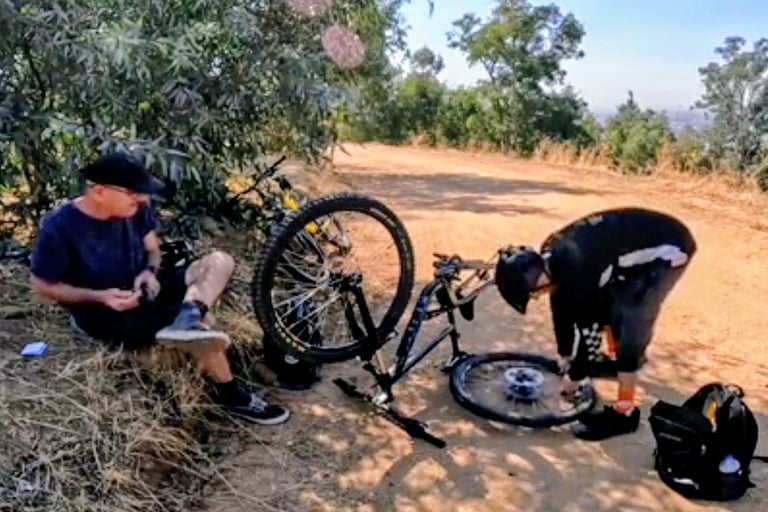
Then there's the other kind of flat that no liner helps with: the pinch flat. Some riders call it a snakebite — when your pressure is too low and the tube gets pinched between the rim and something hard. A sharp rock, a curb, a rough corner. You get two little holes side by side and that's it, ride over. The only defense there is running the right pressure, which is a whole other conversation.
2020: When Tubes Disappeared
If you were riding during the pandemic you remember this. Bike shops sold out of everything. Tubes became genuinely hard to find. If you were dependent on a specific setup and couldn't get supplies, you were stuck.
It was a good reminder that whatever system you run, it helps to be able to adapt. I find tubes on Amazon now, some cheaper ones aren't worth it, quality varies, but once you find a brand that works you stock up. I keep extras at home and always carry one on the trail along with a mini pump.
Going Tubeless: The Promise vs The Reality
Tubeless gets sold as the solution to everything. No tubes means no pinch flats, sealant handles small punctures automatically, you can run lower pressure for better grip and feel. All of that is true.
Here's what they don't tell you.
I got a bike that came set up tubeless and took it out to Sterling Hills for one of my local rides. Near the end of the ride, flat. First ride. I'm standing there thinking I thought this was supposed to be flat proof. Walked the bike back. When I got home I found a nail, a decent sized piece of metal that the sealant couldn't handle. Fair enough, but it set the tone.
Then came the repair learning curve. Getting a tubeless tire to reseal after a real puncture isn't always straightforward. You need to get sealant to coat the hole, get the tire bead to seat against the rim, and get enough air in fast enough for it to pop back into place. On the trail, with a hand pump, after a long ride, it can be a frustrating process. It's doable but it's a skill and it takes practice.
And then there's the shop situation. I had a couple spokes break at a bike park and went to the shop there to get them fixed. They told me there was a $40 charge just to remove the tubeless tire before they could even start the work. I asked if I could just pull the wheel myself and bring them the bare rim, they said yes, that worked. But that's the reality of tubeless for shop work. It's messier, it takes more time, and shops charge accordingly. Honestly I get it, tubeless sealant gets everywhere and it's a pain to work with. Just something to know going in.
Where I Landed
I ran tubeless on my Specialized enduro for a while. I don't anymore. Right now none of my bikes are running tubeless and I'm not in a rush to change that.
What I run instead: slime tubes, DIY tube liners on top, carry a spare tube and a mini pump on every ride. My quick release skewers double as tire levers in a pinch, the lever end works perfectly and it's already on the bike, one less thing to carry.
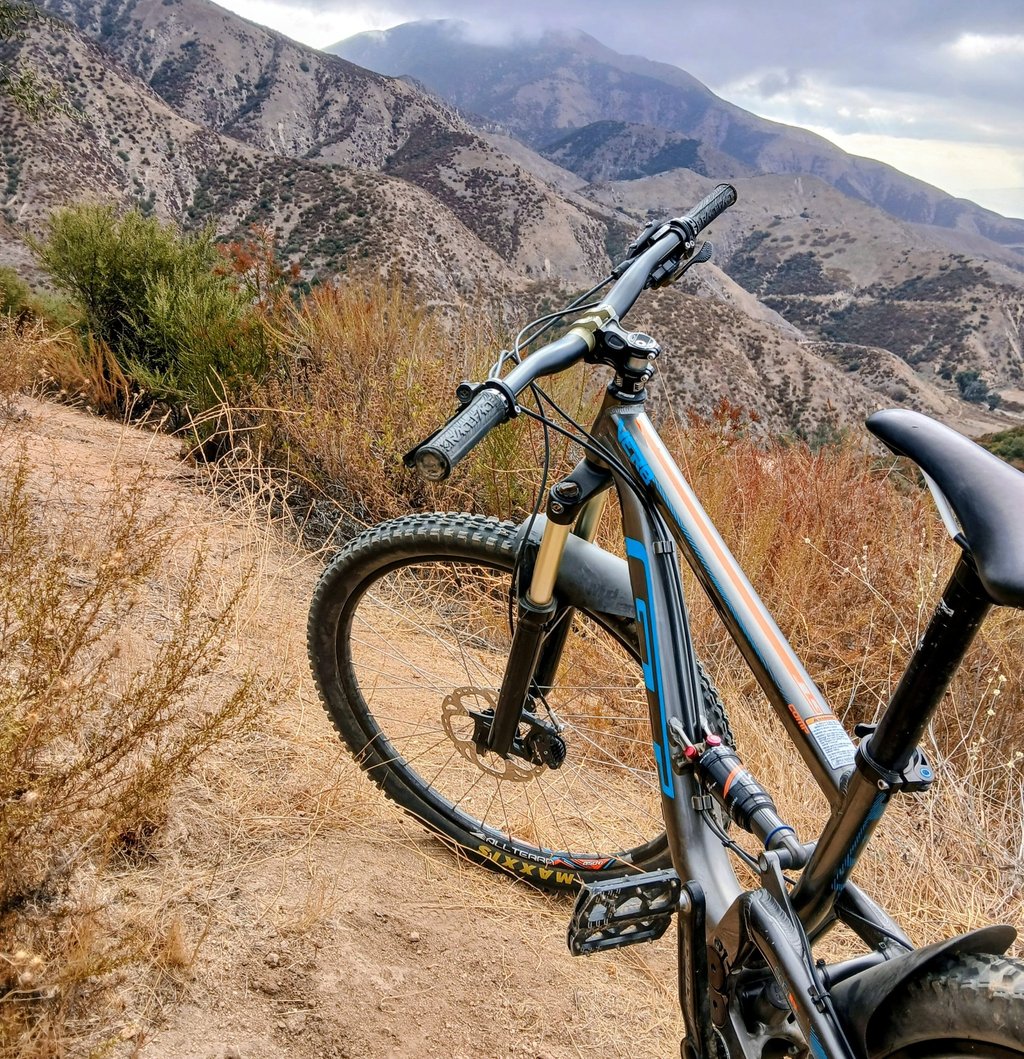
That system works for how and where I ride. Inland Empire hardpack, goathead season, trail rides and some bike park days. Your situation might be different.
So Which Is Better?
Honest answer: neither. It depends on where you ride, how mechanically comfortable you are, and what tradeoffs you're willing to accept.
Tubeless makes sense if:
You ride somewhere with lots of small puncture risk like thorns or sharp gravel
You want to run lower pressure for better feel and traction
You're comfortable with the setup and repair process
Your local shop is tubeless-friendly
Tubes make sense if:
You want simplicity and easy roadside repairs
You're not ready to deal with sealant mess and setup
You ride bikes that aren't set up tubeless from the factory
You've got a good flat prevention system dialed in already
Both systems work. Plenty of serious riders run tubes. Plenty of racers swear by tubeless. What matters is that you understand your setup, know how to fix it when it fails, and aren't walking three miles back to the parking lot unprepared.
Carry a tube. Always.
What I Actually Use
Slime tubes — Check on Amazon
Tire liners — Check on Amazon
Mini pump — Check on Amazon
CO2 inflators — Check on Amazon (faster than a pump for trailside repairs, on my list to switch to)
Looking for tire recommendations to go with your setup? Check out my posts on Best MTB Tires for Wet Conditions and Best MTB Tires for Dry Dusty Trails.