Best MTB Tires for Dry Dusty Trails (What I Run and Why)
Riding dry dusty trails in Southern California or anywhere with loose dirt? Here's what tires I run, my honest take on tubeless vs tubes, tire pressure by weight, and a simple recommendation for most trail riders.
GEAR
4/25/20264 min read
Best MTB Tires for Dry Dusty Trails (What I Run in Southern California)
This post contains affiliate links. As an Amazon Associate I earn from qualifying purchases at no additional cost to you.
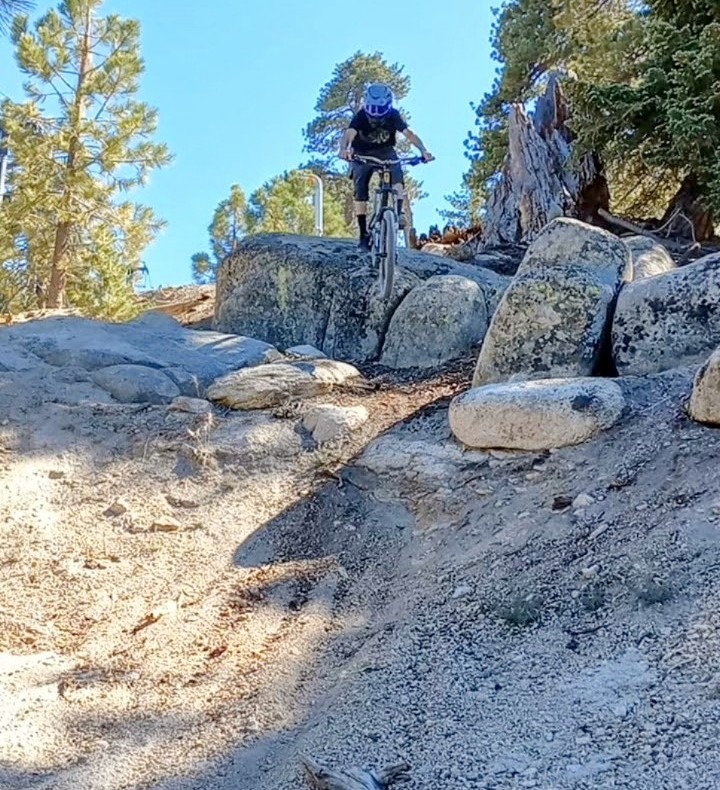
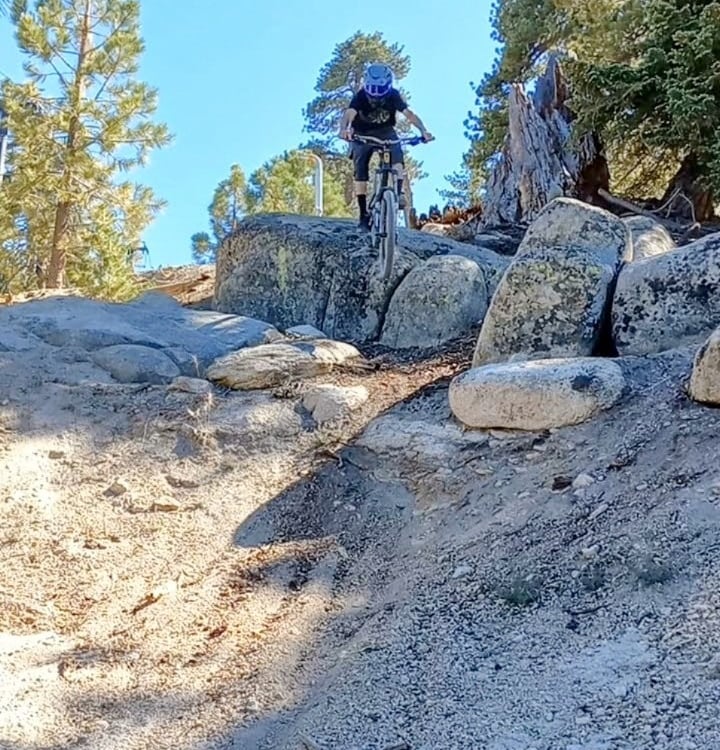
If you ride in Southern California you already know what I'm talking about. Loose dirt, dry decomposed granite, and what riders at the bike park call kitty litter, that deep loose stuff that feels like riding on marbles. Having the wrong tire out here makes everything harder than it needs to be. Having the right one makes a noticeable difference in how the bike feels and how much you can trust it.
I've been riding these trails for a long time and I run Maxxis almost exclusively. Here's what I've learned.
What Type of Riding Are You Doing?
Before picking a tire it helps to know what you're actually doing because the right choice changes depending on your riding style.
Cross country — generally faster rolling, lighter tires, less aggressive tread. You're prioritizing efficiency over grip.
Trail riding — the middle ground. You want something that rolls reasonably well but still grips in corners and loose conditions.
Enduro and downhill — grip and durability over everything. Heavier, more aggressive tread, built to take abuse on steep technical terrain.
Most riders reading this are probably trail or enduro riders. That's where I spend most of my time and what these recommendations are aimed at.
What I Run
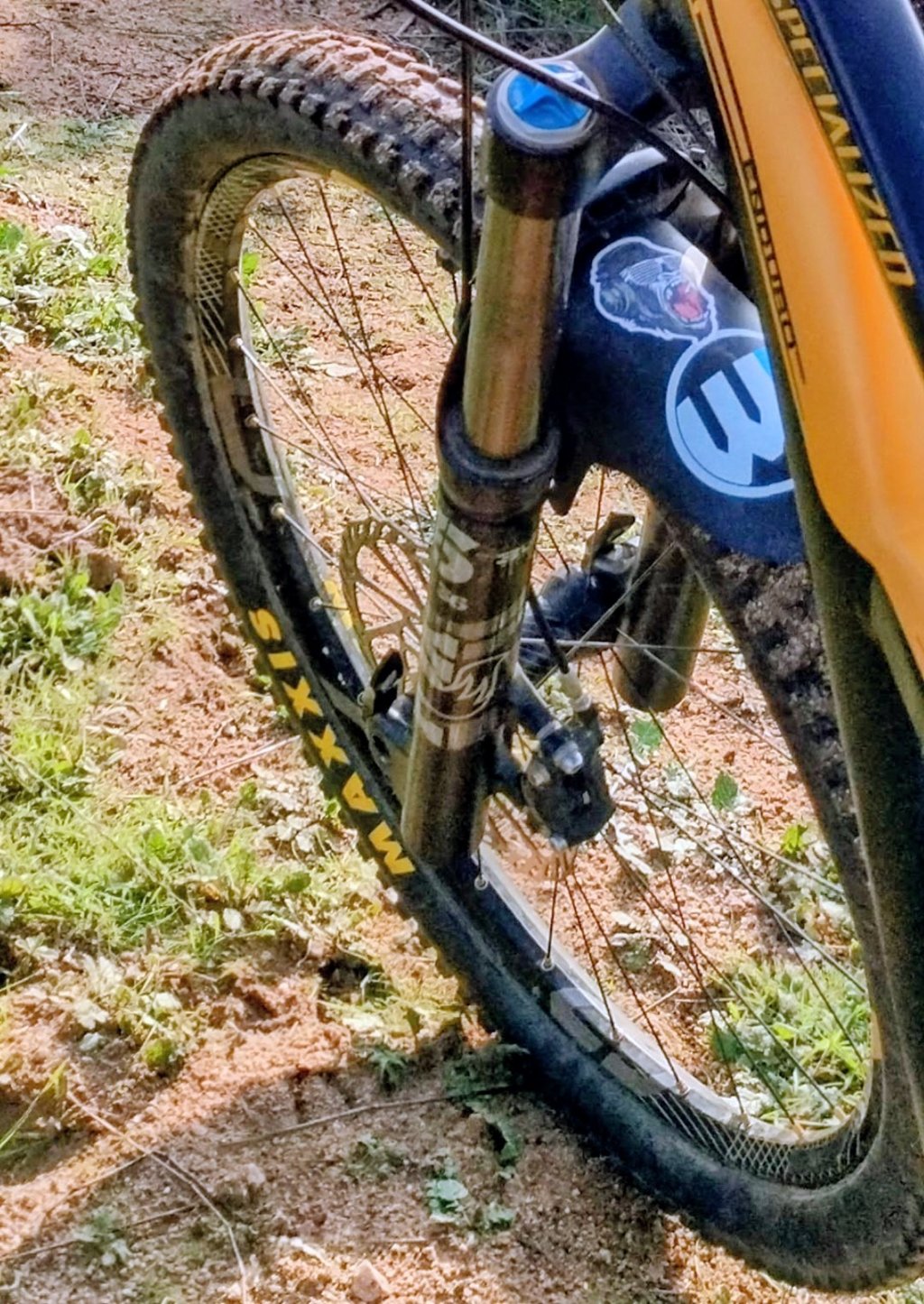
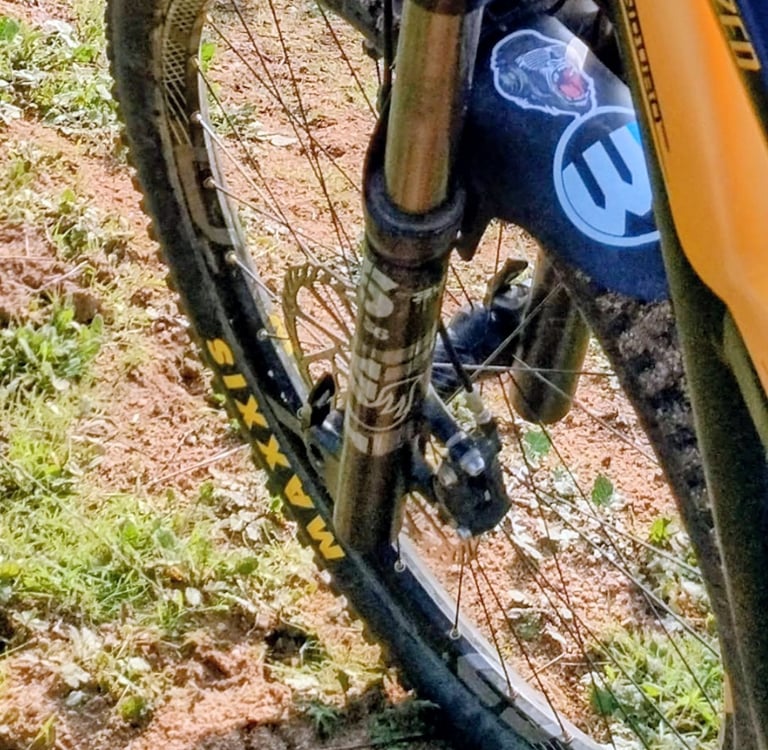
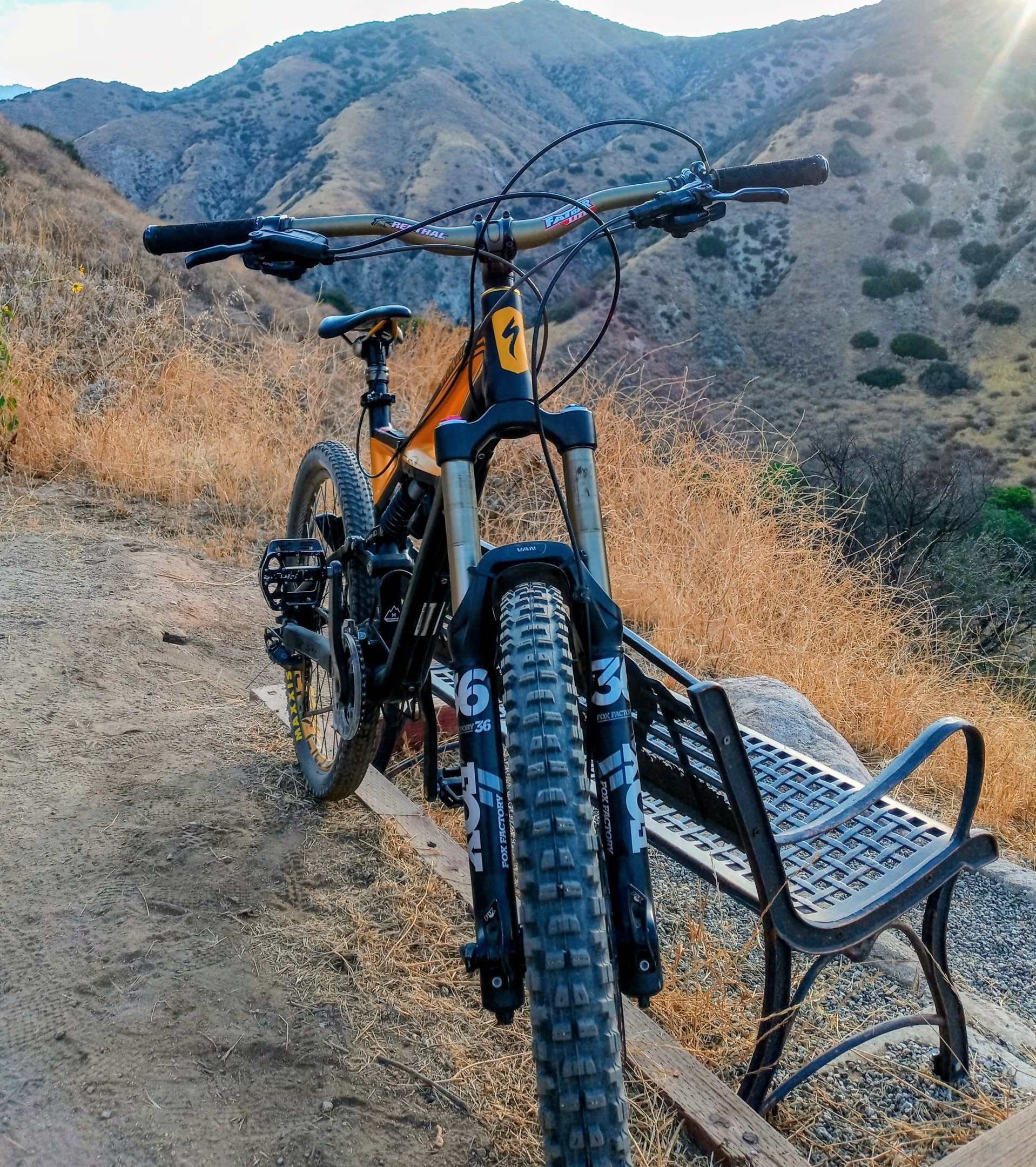
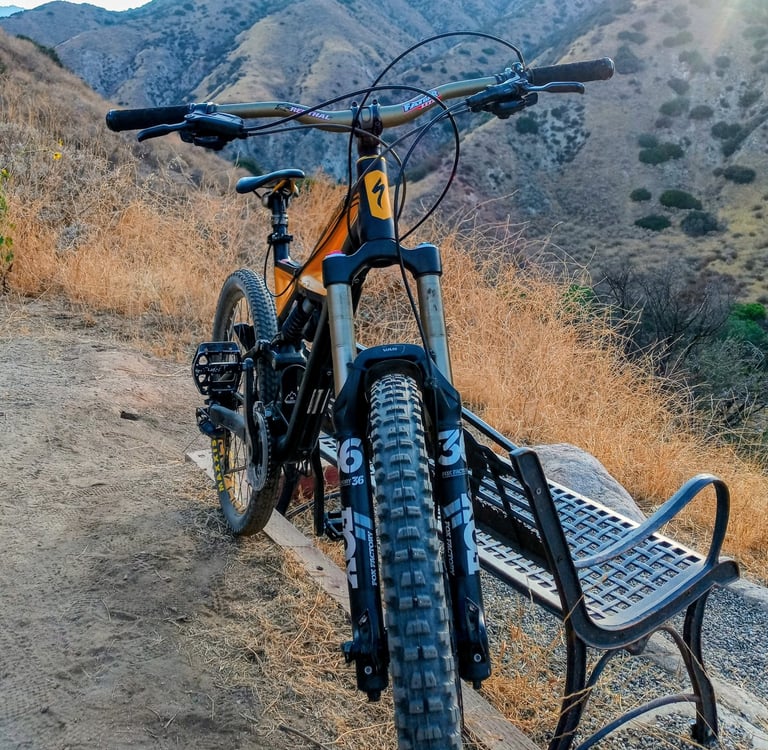
I run the Maxxis Minion DHR II and have for a while. For dry loose SoCal conditions the aggressive tread pattern grips well in corners and the tire handles the kitty litter terrain at the bike park better than slicker options. I run around 2.3 width which gives enough volume to absorb trail chatter without being too sluggish.
A common and well proven setup for trail and enduro riding is a Maxxis Minion DHF up front paired with a DHR II in the rear. The DHF is considered the gold standard front tire for aggressive trail riding, excellent cornering grip and predictable feel. The DHR II in the rear handles braking traction well. It's a classic combination that a lot of riders run for good reason.
MAXXIS DHR on Amazon MAXXIS DHF on Amazon
Tire Pressure
I'll be honest, I don't obsess over tire pressure as much as some riders do. But there are some basics worth knowing.
For dry loose terrain and especially bike park riding where you're hitting jumps and drops I run lower pressure. Lower pressure gives you more tire contact with the ground, better grip in loose dirt, and more cushion on rough landings. Too high and the tire skips and slides on loose stuff.
Weight matters here too. I'm around 125 pounds so I run lower pressure than a heavier rider would for the same conditions — somewhere around 18 psi for bike park riding. A heavier rider might need more pressure to avoid pinch flats and get proper tire support. General ballpark is lighter riders go lower, heavier riders go higher, and you adjust from there based on feel.
If you're still running tubes like me be aware that going too low increases your pinch flat risk especially on rocky terrain. Tubeless setups can handle lower pressures more safely but they come with their own tradeoffs.
Tubeless vs Tubes — My Honest Take
A lot of riders swear by tubeless and there are real benefits, lower pressure without pinch flat risk, self sealing small punctures. But I run tubes and I'll tell you why.
Tubeless is messy to set up and maintain. The sealant gets everywhere. And if you need to take your bike to a shop quickly for any reason tubeless tires cost more just to remove and deal with. For the kind of riding I do tubes work fine and the simplicity is worth it to me.
If you're doing serious racing or long technical rides where a flat could ruin your day tubeless makes more sense. For most trail riders tubes are completely fine.
Tire Wear — When to Replace
I'll ride a tire until it's pretty far gone honestly. Back in my racing days I had dedicated race tires and everyday tires — different rubber compounds for different purposes. I'm not in that position now and most riders aren't either.
The practical answer is replace when the center knobs start rounding off noticeably, when you start losing traction in conditions where you used to have grip, or when the sidewalls show significant cracking or damage. A tire that's worn but still has defined knobs is still working.
If budget allows, front tire matters more than rear, the front is your steering and if that breaks loose unexpectedly it's a much worse situation than the rear sliding out. Prioritize replacing the front when you have to choose.
Simple Recommendation for Dry Dusty Trail Riders
If you're not sure where to start and you ride dry loose trails — whether that's Southern California, the Southwest, or anywhere with dry dusty summers — Maxxis Minion DHF up front, Maxxis Minion DHR II in the rear, around 2.3 width, pressure based on your weight and the terrain. That setup will serve you well on most dry trail conditions. Also if you want to know what to run in wet conditions see my post on best tires for wet riding
Want to improve your riding skills? Check out my Ebooks