Full-Face vs. Half-Shell MTB Helmet: Which Do You Need?
Compare full-face and half-shell MTB helmets for protection, comfort, ventilation, and different riding styles to decide which helmet you need.
GEAR
8/10/202610 min read
Full-Face vs. Half-Shell MTB Helmet: Which Do You Need?
Are you trying to decide between a half-shell and a full-face mountain bike helmet? The best choice depends on several factors, including the type of riding you do, the terrain, your speed, and the consequences of crashing.
A cross-country rider on moderate trails has different needs from someone riding downhill, enduro, rocky terrain, large drops, or bike-park jumps. A half shell is lighter and cooler for everyday trail riding, while a full face adds protection around your face and jaw.
I have worn both styles since I began riding in the late 1990s. For most rides, I prefer a half shell, but there are times when I wouldn’t feel sufficiently protected without a full face.
Quick Answer: Full Face or Half Shell?
For ordinary trail riding, cross-country riding, climbing, and lower-risk rides, a half-shell helmet is usually the most practical option. It is lighter, cooler, and easier to wear for long periods.
A full-face helmet makes more sense for downhill riding, bike parks, racing, higher speeds, rocky descents, and larger jumps or drops. It adds protection around the chin, jaw, and face—areas that a half shell leaves exposed.
Many riders who do different types of riding eventually own both.
What Is a Half-Shell MTB Helmet?
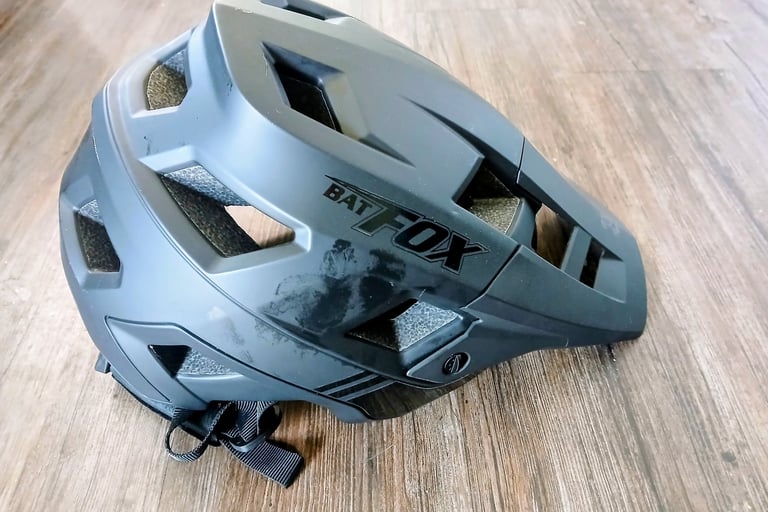
A half-shell MTB helmet covers the top and sides of your head, and many modern trail helmets extend farther down the back of the head than a basic road-bike helmet.
Half shells are light, breathable, and well suited to cross-country riding and easy-to-moderate trail rides. I use one for most of my riding because it is comfortable, doesn’t get excessively hot, and allows me to see and hear my surroundings easily.
I also like that a half shell is relatively easy to strap to a backpack during a long climb.
However, there are times when I don’t feel sufficiently protected in one. On steep, rocky trails or when riding large drops and jumps, I become much more aware that my face and jaw are exposed.
What Is a Full-Face MTB Helmet?
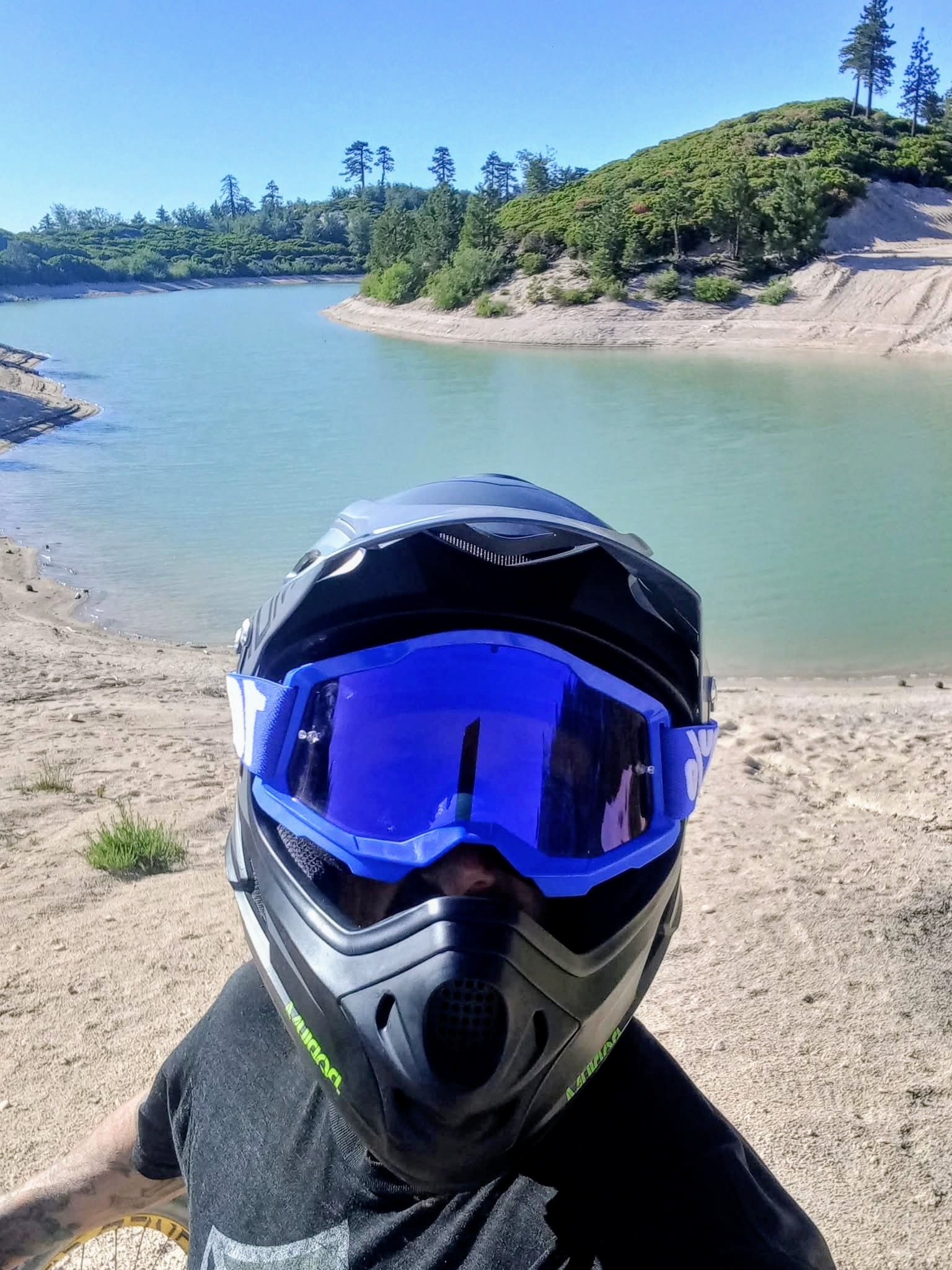
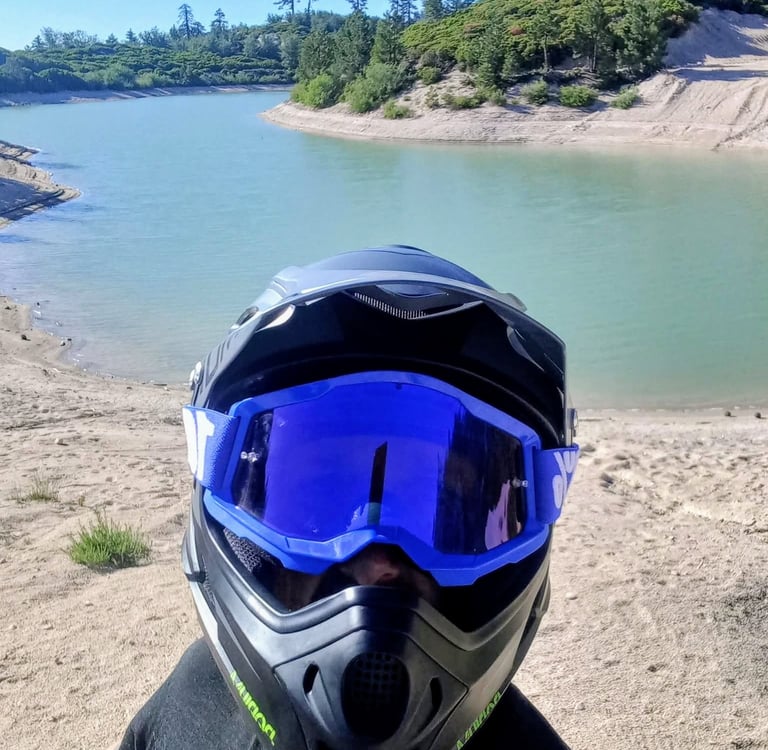
A full-face MTB helmet covers the head and adds a chin bar in front of the jaw and lower face. It is commonly used for downhill racing, bike parks, high-speed terrain, and more aggressive riding.
Full-face helmets generally provide more coverage around the back and sides of the head than basic half shells. However, coverage and safety certifications vary between models, so it is important to check the specifications of the particular helmet.
Modern full-face MTB helmets are lighter and better ventilated than many older models. Even so, they usually feel hotter, heavier, and more enclosed than half shells.
My First Full-Face Helmet—and Immediate Crash Test
I’ll never forget getting my first full-face helmet for Christmas in either 1998 or 1999. It was a blue Vigor helmet.
My dad and I went riding so I could try it out. We were descending a familiar trail and started racing side by side. I saw a large pile of rocks and tried to ride over it, but I didn’t make it. I went over the handlebars hard.
The crash broke the helmet’s visor and left the helmet covered in scratches. My dad and I immediately thought, “Good thing you were wearing that full face.”
The next day, I had two black eyes. I may have also broken my nose, although I don’t remember for sure. When I went to school, my teachers kept asking if somebody had hit me at home.
“No, I crashed my bike.”
They asked if I was sure. Yes, I was sure. My dad had already warned me that people might ask questions when they saw my face.
Although I was still injured, the condition of the helmet showed how hard I had hit. I wouldn’t want to repeat that crash in a half shell.
Another important benefit of a full-face helmet is protecting the mouth and jaw. Dental injuries can be painful and extremely expensive, so face protection is worth considering when the consequences of a crash are higher.
Full-Face vs. Half-Shell Helmets: Main Differences
Full-Face vs. Half-Shell Helmets: Main Differences
Coverage: A half shell covers the top, sides, and part of the back of your head. A full face adds protection around your face and jaw.
Weight: Half-shell helmets are lighter. Full-face helmets are usually heavier.
Ventilation: Half shells are cooler and more breathable. Full faces can get hotter, although modern designs have improved.
Pedaling: Half shells are generally more comfortable for long climbs and everyday rides. Full faces can become uncomfortable during extended climbing.
Vision and awareness: Half shells feel open and unobstructed. Full faces can feel more enclosed.
Face protection: Half shells leave your face and jaw exposed. Full faces include a protective chin bar.
Price: Half shells are usually less expensive. Full-face helmets generally cost more.
Best uses: Half shells work well for cross-country and ordinary trail riding. Full faces are better suited to downhill riding, bike parks, racing, and higher-consequence terrain.
Benefits of a Half-Shell Helmet
The biggest benefits of a half shell are comfort, airflow, and convenience.
A half shell is usually:
Lighter and cooler
More comfortable while climbing
Easier to hear and communicate in
Less restrictive around your face
Easier to drink and eat while wearing
Easier to attach to a backpack
Less expensive than a full face
For the majority of my rides, a half shell provides the balance of protection and comfort I want.
Downsides of a Half-Shell Helmet
The main limitation is that it leaves your face, jaw, and teeth exposed.
A half shell may protect your skull during a crash, but it cannot provide the same facial coverage as a chin bar. That becomes more important when riding fast, descending steep or rocky terrain, or attempting features with greater consequences.
A half shell can still be appropriate on difficult trails, depending on the rider and situation. However, when the likelihood or potential severity of a face-first impact increases, a full face becomes more appealing.
Benefits of a Full-Face Helmet
A full-face helmet’s primary advantage is its additional coverage. The chin bar helps protect areas that remain completely exposed in a half shell.
A full face may be a better choice for:
Downhill riding
Bike parks and shuttle days
Racing
High-speed rocky descents
Large drops and jumps
Learning skills where a face-first impact is a realistic concern
Wearing one can also increase confidence. However, that confidence shouldn’t cause you to ride beyond your ability. A full face reduces certain risks; it doesn’t make a dangerous feature safe or prevent every injury.
Downsides of a Full-Face Helmet
Full-face helmets are generally hotter, heavier, and more expensive. They can also feel more restrictive, particularly if you grew up riding in half shells.
I especially notice the enclosed feeling around my peripheral vision and hearing. A properly fitting modern full face should still provide a useful field of view, but some models feel more restrictive than others. This is one reason trying on a helmet before buying it can be helpful.
Other disadvantages include:
More heat during climbs
Additional weight
Greater cost
More difficulty eating or drinking
Slightly harder communication
More bulk when attaching it to a backpack
The possible added cost of goggles
I also had one extremely unusual experience with a full face while riding the back trails in Big Bear. I crashed into a dead log, which practically disintegrated on impact. I heard buzzing and then started feeling stings—the log contained a yellow-jacket nest.
I left my bike and ran, but some of the yellow jackets flew inside my helmet. Feeling them around my face freaked me out, so I pulled the helmet off and ended up being stung repeatedly on the head.
A half shell wouldn’t necessarily have prevented the stings, but the enclosed feeling of having yellow jackets inside a full face made me panic. It was a freak situation, but one I’ll never forget.
When Should You Wear a Half Shell?
A half shell is usually suitable for:
Cross-country riding
Casual riding and commuting
Easy and moderate trails
Long rides with substantial climbing
Lower-speed skills practice
Rides without large jumps, drops, or high-consequence terrain
Trail ratings alone shouldn’t make the decision. Speed, exposure, rocks, features, weather, and your comfort level all matter.
A familiar trail ridden slowly may call for different protection than the same trail ridden aggressively.
When Should You Wear a Full Face?
I am more likely to wear a full face when:
Riding downhill trails
Spending a day at a bike park
Attempting large jumps or drops
Riding steep and rocky terrain
Racing
Going faster than usual
Riding something outside my comfort zone
My rule is to consider the possible consequences of crashing, not just whether other riders are wearing full faces.
Do Beginners Need a Full-Face Helmet?
Being a beginner doesn’t automatically mean you need a full face for every ride.
If you’re beginning on easy local trails and aren’t attempting difficult features, a properly fitting half shell can be a reasonable choice. Beginners can still crash on easy terrain, but that doesn’t mean everyone needs maximum coverage every time they get on a bike.
On the other hand, full-face helmets aren’t only for experts. If a beginner is going to a bike park, learning to jump, or riding fast, steep, or rocky terrain, the additional protection may be worthwhile.
Choose the helmet based on the riding—not your skill label.
What About Convertible Full-Face Helmets?
Convertible helmets have a removable chin bar, allowing the rider to use the helmet as a half shell for climbing and attach the chin bar before descending.
I haven’t personally used one, but I understand why they appeal to riders who want both options without carrying two complete helmets.
The tradeoffs can include additional cost, weight, moving parts, and the hassle of carrying the chin bar. Riders should also check the manufacturer’s instructions and the helmet’s exact safety certifications. Not every removable chin bar provides the same level of protection as a downhill-certified full-face helmet.
Other MTB Helmet Styles You May See
In addition to ordinary half shells and full faces, you may see a few other styles.
BMX or dirt-jump helmets have a rounded skate-style shape and normally don’t have a visor. I used to ride in this style frequently. They work well for BMX, dirt jumping, and skateparks, although they may not provide as much ventilation as a well-ventilated trail helmet.
You may also see open-face MTB helmets with extended coverage around the back of the head and ears but no chin bar. These are sometimes described as three-quarter or extended-coverage helmets. They provide more coverage than a typical half shell without fully enclosing the face.
A newer category of lightweight full-face helmets uses highly ventilated chin bars. Some have thin or unusual-looking structures intended to improve airflow while maintaining facial coverage. Because these designs vary, check each helmet’s safety certifications rather than judging its protection by appearance alone.
Can You Use a Dirt-Bike Helmet for Mountain Biking?
I have personal experience with this. When I was younger, I tried riding in a dirt-bike helmet several times. My dad also used an O’Neal dirt-bike helmet for downhill riding.
A motocross helmet may look similar to a full-face MTB helmet, but it is built and tested for motorcycling. It is generally heavier, bulkier, and less ventilated because it isn’t primarily designed for somebody pedaling a bicycle uphill.
Motorcycle and bicycle helmets can also follow different safety standards. That means I wouldn’t assume a dirt-bike helmet is automatically more protective for every type of mountain-bike impact just because it is larger and heavier.
If someone already owns one, it may seem tempting to use it temporarily. However, a properly fitting, purpose-built full-face MTB helmet with the appropriate bicycle certification is the better long-term choice. I found the MTB version lighter, cooler, and more comfortable.
Helmet Fit and Safety Matter More Than the Style
No matter which style you choose, it needs to fit correctly.
A helmet should:
Fit snugly without creating painful pressure points
Remain secure when you move or shake your head
Be the correct size and shape for your head
Have properly adjusted straps and fasteners
Meet an appropriate bicycle helmet safety standard
Be worn according to the manufacturer’s instructions
An expensive helmet that fits badly is not automatically better than an affordable helmet that fits correctly.
A helmet involved in a significant impact may need to be replaced even if the damage isn’t obvious. Follow the manufacturer’s replacement guidance, and don’t continue using a cracked or visibly damaged helmet.
Should You Own Both?
If you regularly do different types of riding, I think owning both eventually makes sense. I have generally kept a half shell for most of my riding and a full face for downhill runs, bike parks, larger features, and situations outside my normal comfort zone.
However, a new rider doesn’t need to buy two helmets immediately.
If you just bought a bike and plan to begin on easy local trails, start with a good, properly fitting half shell. If your riding later progresses toward bike parks, downhill trails, rough terrain, or larger features, you can add a full face.
Final Recommendation
For ordinary trail riding, cross-country riding, climbing, and lower-risk rides, I would choose a half shell. It is lighter, cooler, and more convenient.
For downhill trails, bike parks, high speeds, rocky terrain, and larger jumps or drops, I would choose a full face. The extra face and jaw coverage is worth the added heat and weight when the consequences of crashing are greater.
Don’t choose a helmet because of how it looks or because of what everyone else is wearing. Consider the terrain, your speed, the features you plan to ride, and what could happen during a crash.
Most importantly, choose a certified helmet that fits properly—and wear it every time you ride.
Once you know which style is right for your riding, check out my guide to the best budget mountain bike helmets. It includes affordable half-shell and full-face options, including helmets I personally use.
Choosing a helmet is only one part of getting started. If you’re new to mountain biking, my Complete Guide to Mountain Biking for Beginners covers essential gear, riding skills, trail basics, safety, and everything else you need to begin riding with confidence. Check out the beginner mountain biking guide here.