What Size Mountain Bike Backpack Do You Need?
What size MTB backpack do you need? Learn the best pack size for short rides, trail rides, and all-day rides, plus what to carry and how much water you need.
GEAR
8/19/20269 min read

What Size Mountain Bike Backpack Do You Need?
What size mountain bike backpack you need mostly depends on how long you're riding and what you need to bring with you. For a short ride, you can get away with a very small hydration pack—or sometimes no backpack at all. For a normal trail ride, you'll probably want enough room for water, tools, snacks, and maybe an extra layer. For long or all-day rides, you'll need more room for extra water, food, clothing, tools, and possibly things like pads or camera gear.
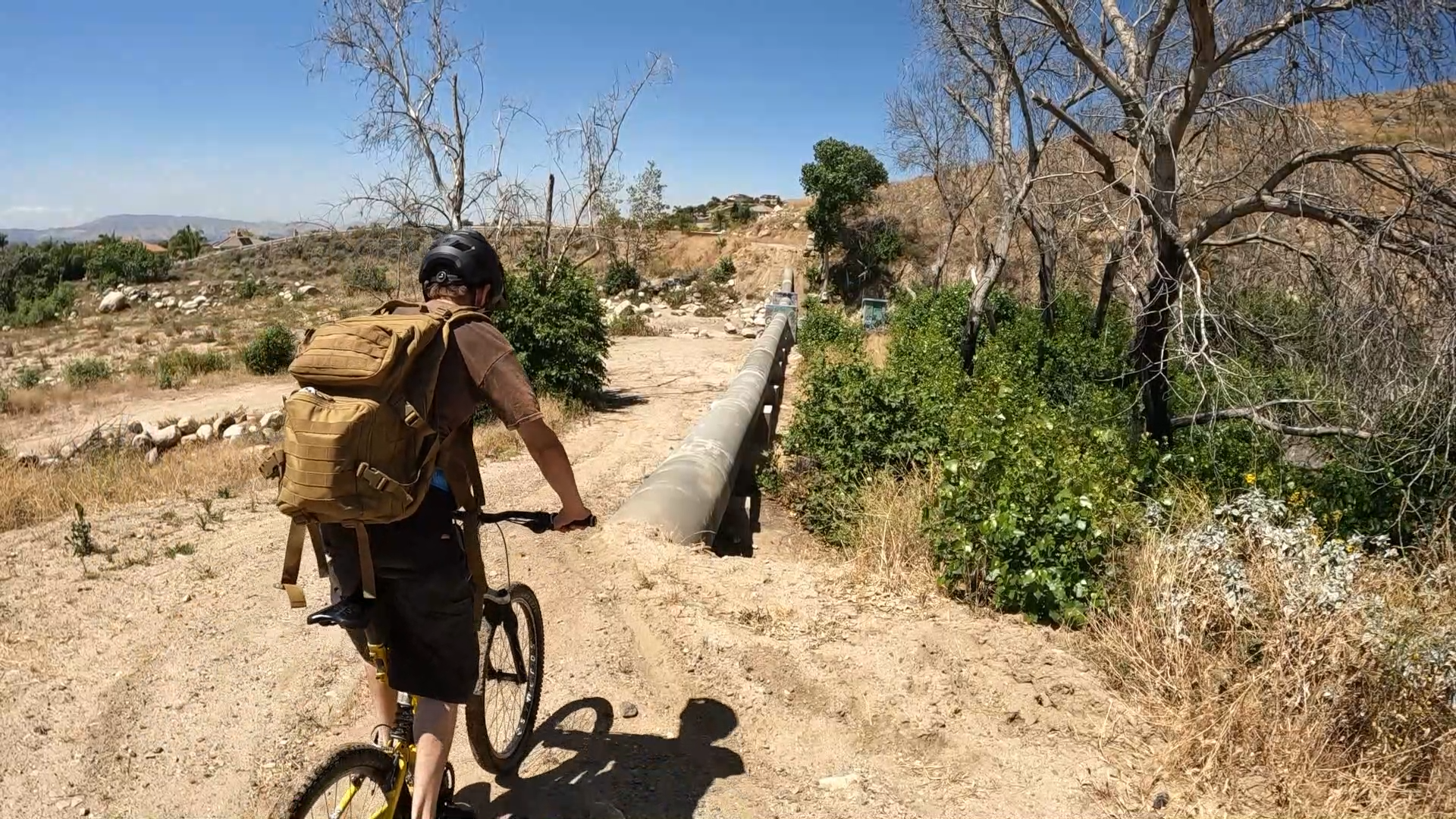
I've worn all different sizes and types of backpacks over the decades, from regular backpacks and hydration packs to the larger tactical-style bags I use now. What works best really depends on the type of riding you're doing, so here's what I've found works for different situations.
Quick Guide to MTB Backpack Sizes
As a general starting point, 0–5 liters works well for short rides and minimalist setups, 6–12 liters is a good range for typical trail rides, and 12–20+ liters makes more sense for long rides, all-day adventures, changing weather, or carrying a lot of extra gear.
These aren't hard rules. Someone riding for two hours in extreme heat might need more carrying capacity than someone riding twice as long in cool weather. The amount of water and clothing you need can make as much difference as the actual length of the ride.
What Does Backpack Size in Liters Mean?
When you see a backpack listed as 3L, 8L, 15L, and so on, liters describe the approximate carrying capacity of the pack. A small 3-liter pack might have enough room for the essentials but very little clothing. An 8-liter pack gives you more room for tools, food, and a light layer, while a 15-liter pack can carry considerably more clothing, food, emergency gear, and other equipment.
One thing to pay attention to with hydration packs is how much usable storage you actually get once the water bladder is full. I've looked at small hydration packs online and thought they had plenty of room, only to find there wasn't nearly as much usable space once the bladder was inside. So don't look at the advertised capacity alone. Look at how the storage is divided and how much room remains when you're carrying a full bladder.
What Size Backpack Do You Need for a Short MTB Ride?
For a short ride, somewhere around 0–5 liters can be plenty. You might only need a small hydration pack with water, a multitool, and a few basic repair supplies. Depending on where you're riding, the weather, and how much water you need, you might not need a backpack at all.
You can carry a water bottle on the bike and put a tube, tire repair supplies, and tools in a small bike or saddle bag. If you can safely ride without a backpack, I recommend trying it. I've ridden with backpacks for most of my life, both commuting and mountain biking, and riding without one feels great. You don't realize how much you notice a backpack until suddenly there isn't one on your back.
What Size Backpack Do You Need for a Typical Trail Ride?
For the average trail ride, I'd look at roughly 6–12 liters. You want enough room for the basics without carrying a huge bag. That could include water, tools, tire repair supplies, a snack or two, and possibly some clothing.
Clothing is something that's easy to overlook when choosing a pack. If you start riding early when it's cold, you might need a jacket or sweater. A couple of hours later it warms up, and suddenly that jacket has to go somewhere. A pack that seems plenty big enough for your tools and snacks can get cramped pretty quickly when you stuff a jacket into it. For most riders who want one backpack that will work for a variety of normal rides, this middle size range is where I'd start.
What Size Backpack Do You Need for a Long or All-Day Ride?
For long rides and all-day adventures, you might want 12–20 liters or more, depending on the ride. Now you're potentially carrying a lot more water, food, repair supplies, extra clothing, and possibly some emergency gear. I also like having enough room to store things I'm not wearing for the entire ride, such as knee pads or goggles that I want for the downhill but don't necessarily want to wear for a long climb.
These days I'm also often carrying camera equipment. If I'm going out to film, I might have a GoPro, extra batteries, microphones, tripods, tools, tubes, food, water, and clothing. At that point my needs are very different from someone going out for a normal two-hour trail ride. That's one reason I use larger regular or tactical-style backpacks now. It isn't necessarily what I'd recommend to the average mountain biker—I just carry a lot of stuff.
Water Capacity vs. Storage Capacity
This is especially important when you're shopping for a hydration pack online. A pack can look like it has plenty of storage space until you put a full water bladder inside. Water takes up a lot of room, and it's heavy.
Think about two things separately: how much water can the pack carry, and how much usable storage is left after you fill it with that water? For a normal ride this might not be a big problem, but on a hot day or a long ride where you need a lot of water, it matters.
Weather and Temperature Can Change What Size You Need
Weather plays a big role in how much backpack space you need. Here in Southern California, heat can mean carrying a lot of water. There are times when I'm heading way out into the hills to film all day and I'm carrying so much water that the pack feels ridiculously heavy. I just tell myself as I'm riding that at least it'll get lighter as I drink it. I've even carried a gallon water jug on my handlebars when riding out to jumps or the top of a climb where I'm going to spend a long time filming.
Cold weather creates the opposite problem: bulky clothing. There's a time of year here, usually around January through March, when it's cold enough early in the morning that I want a sweater or jacket. Then the sun comes up, it warms up, and now I'm stuck carrying that jacket for the rest of the day. I've had mornings where I've actually wondered whether I'd rather just be cold for a couple of hours so I don't have to carry a jacket around all day.
You might also need a windbreaker or rain jacket depending on where and when you ride. I usually carry a few Ziploc bags as well. If it suddenly starts raining, I have something to protect my phone and small electronics like my GoPro equipment and microphone.
Backpack vs. Hydration Pack vs. Hip Pack
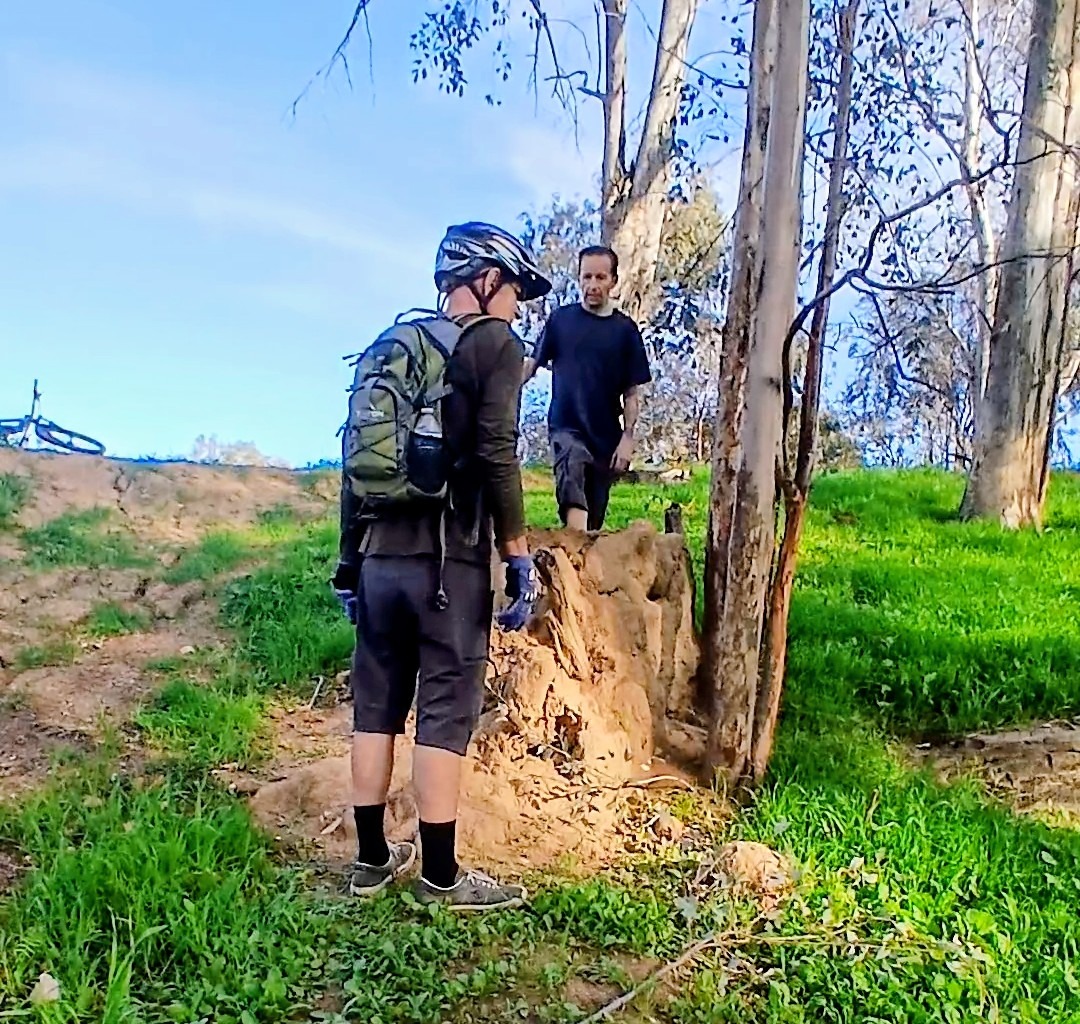
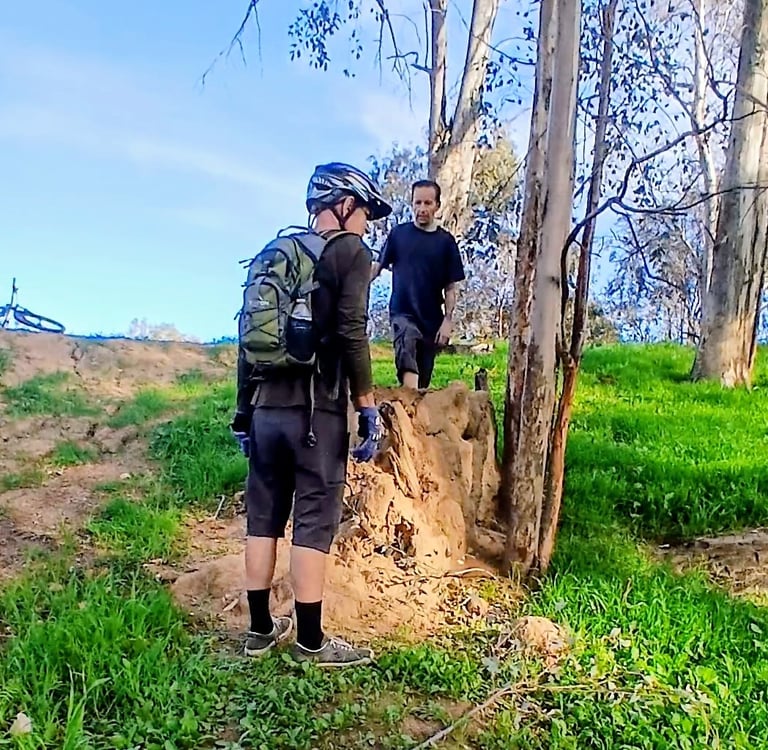
There are three common options for carrying your stuff while mountain biking. A regular backpack gives you plenty of flexibility and usually a lot of storage. A hydration pack has a dedicated bladder with a drinking hose, making it easy to drink without stopping. Many are specifically designed for mountain biking and have storage for tools, food, and clothing. A hip pack, sometimes called a fanny pack, sits around your waist instead of your shoulders, and some have room for a water bottle or hydration reservoir.
I've used regular backpacks and hydration packs for years, and I've tried a hip pack as well. Personally, I didn't like the hip pack because I felt it bouncing around too much. Other riders love them, though, especially because they keep your back more open. For most riders, I think a medium-sized hydration pack is probably the best all-around choice. The main reason I now use regular and tactical-style backpacks is simply that I need more room for filming equipment.
Do You Even Need a Backpack?
Not necessarily. If you can carry enough water on your bike and have somewhere to store your basic repair equipment, going without a backpack can be great. Bike parks are where I've done this the most. If I can leave my main bag somewhere secure and only carry what I actually need while riding, I love the feeling of not having a backpack moving around on my back.
You can also build a backpack-free trail setup with water bottle cages and on-bike storage for tools and repair supplies. Of course, whether this works depends heavily on the ride. Going without a pack on a short local loop is very different from heading miles into the backcountry.
What Should You Carry in an MTB Backpack?
Exactly what you need depends on the ride, but I normally think about water, snacks, a multitool, tire repair supplies, a pump or CO2 inflator, a spare tube, my phone, and whatever clothing I might need. On longer or more remote rides, it also makes sense to carry some basic emergency or first-aid supplies.
Even if you're riding tubeless, carrying a tube can still be useful. Tubeless doesn't make you immune to every tire problem, and a damaged tire that won't seal can sometimes leave you needing a tube to get home. And if you're like me, you might want some form of caffeine. Lately I've been throwing individual instant coffee packets in my bag. They take up almost no room, weigh practically nothing, and they're there if I want them.
Don't Automatically Buy the Biggest Backpack
It might seem like buying a huge backpack is the safest option because you'll never run out of room, but I wouldn't necessarily do that. More space makes it very easy to bring more stuff than you actually need. Before long, you've got a heavy backpack full of things that rarely leave the bag.
A bigger pack can also be hotter, heavier, and more noticeable while you're moving around on the bike. I'd rather have a pack that's big enough for what I actually need than carry a huge pack just because I might someday need the extra space.
What Size MTB Backpack Should a Beginner Buy?
If you're a beginner buying your first mountain bike backpack and you only want one, I'd look somewhere around 8–12 liters. That's enough capacity for most normal trail rides without getting into the size of a large hiking or tactical backpack.
I'd also look for a hydration pack with enough actual storage space after the bladder is filled. You want somewhere for tools, food, a spare tube, and ideally a little extra room for a light jacket or other layer. After you've been riding for a while, you'll get a much better idea of what you personally like to bring.
My Personal MTB Backpack Setup
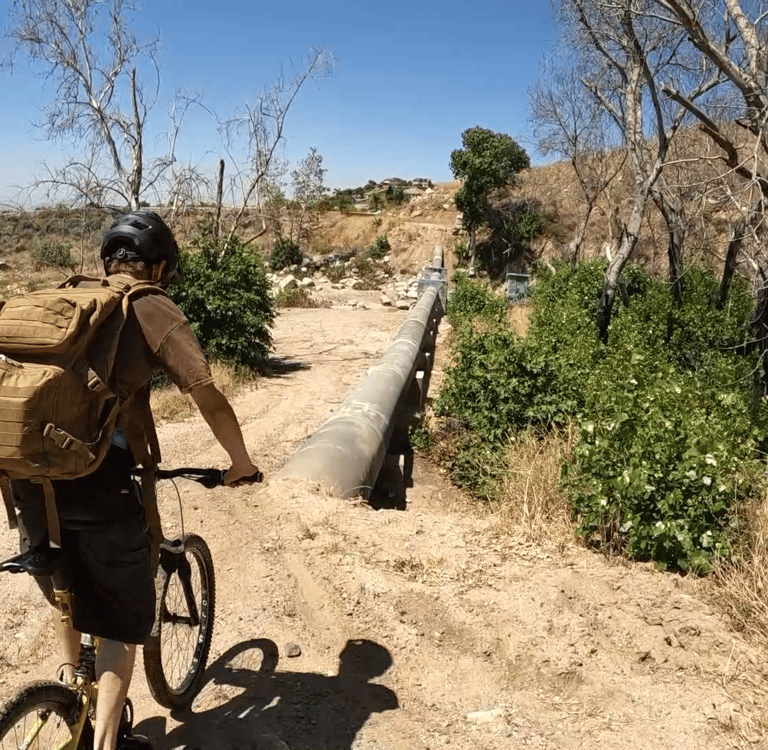
My setup is probably bigger than what most riders need. I've used regular backpacks and hydration packs for years, but these days I usually use a tactical-style backpack. The biggest reason is storage. Since I started making mountain bike videos, a ride can also be a filming day, so I may be carrying water, food, tools, tubes, extra clothes, a GoPro, batteries, microphones, and multiple tripods.
For a regular trail ride, I wouldn't tell someone they need to carry all of that. If I were choosing one pack purely for everyday mountain biking, I'd probably stick with a medium-sized hydration pack that gives me enough room for water, repair equipment, food, and an extra layer.
Ultimately, the best MTB backpack isn't the biggest one or the one with the most features. It's the smallest pack that comfortably carries everything you actually need for the ride you're doing.
I've used regular backpacks and hydration packs for years, but these days I usually use a tactical-style backpack. If you're curious why, I wrote a separate post about why I switched to a tactical backpack for mountain biking.
Want More Help Getting Started With Mountain Biking?
If you're newer to mountain biking, choosing what to carry is only one part of getting started. I put together The Complete Guide to Mountain Biking for Beginners to help new riders understand the basics, including bike setup, riding skills, trail safety, gear, and what to expect as you start riding more.
Check out The Complete Guide to Mountain Biking for Beginners here.