Tips to Improve Your Manuals and Wheelies
\Struggling to hold a manual or keep your wheelie straight? In this post, you’ll learn beginner-friendly tips to improve your manuals and wheelies on a mountain bike. From body position and brake control to practice drills, this guide will help you gain better balance and confidence while riding.
SKILLS
3/7/20258 min read
Tips to Improve Your Manuals and Wheelies
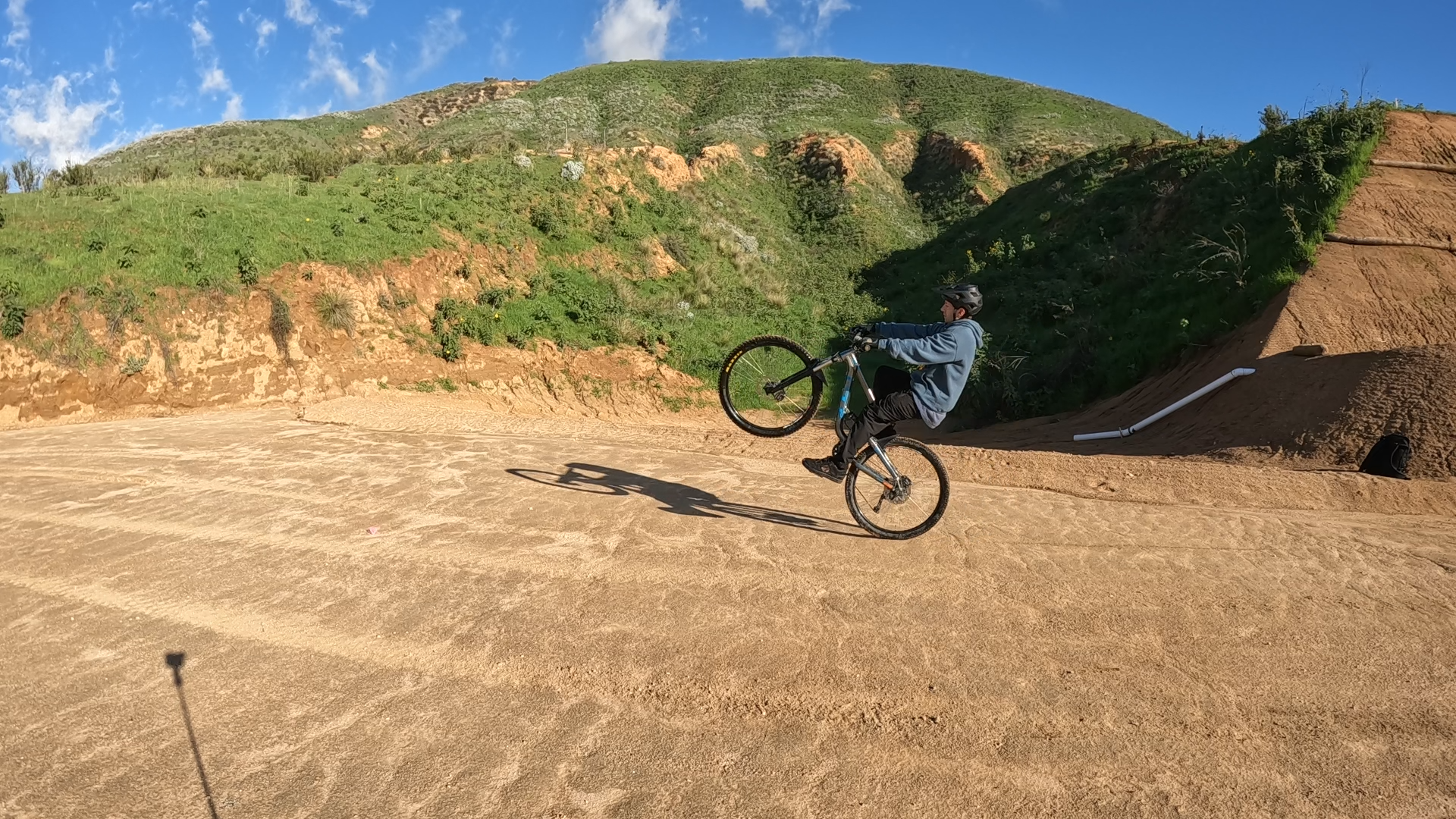
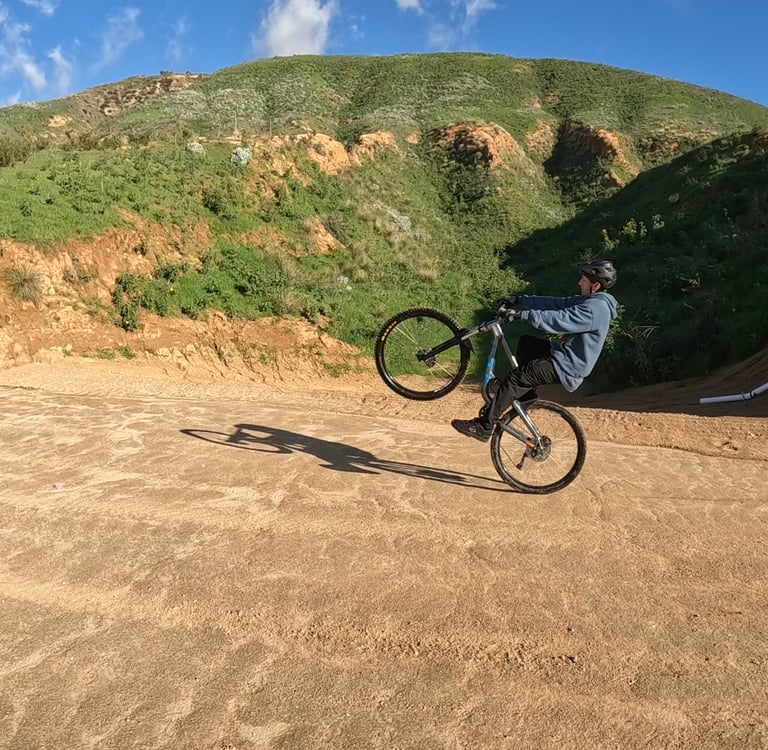
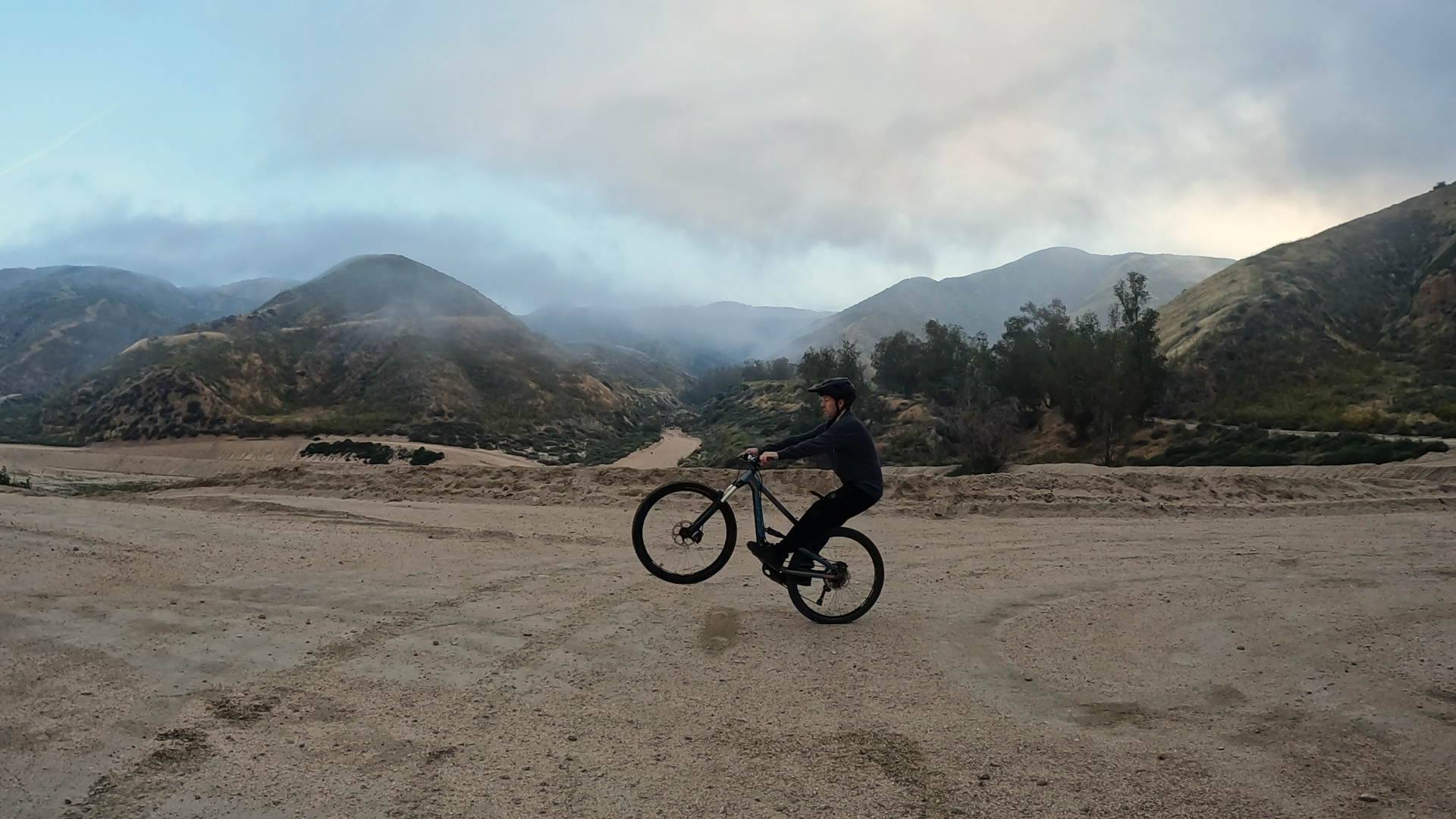
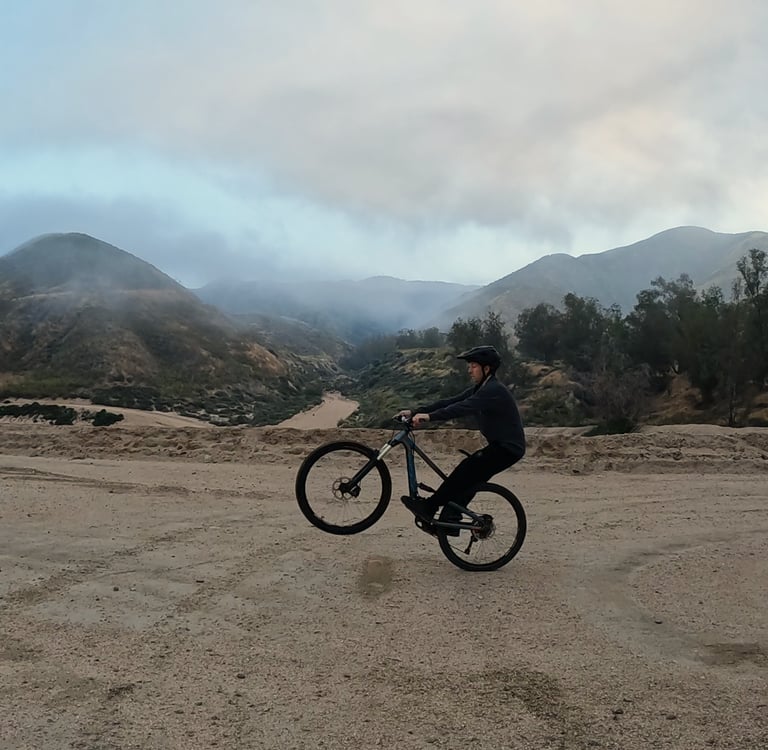
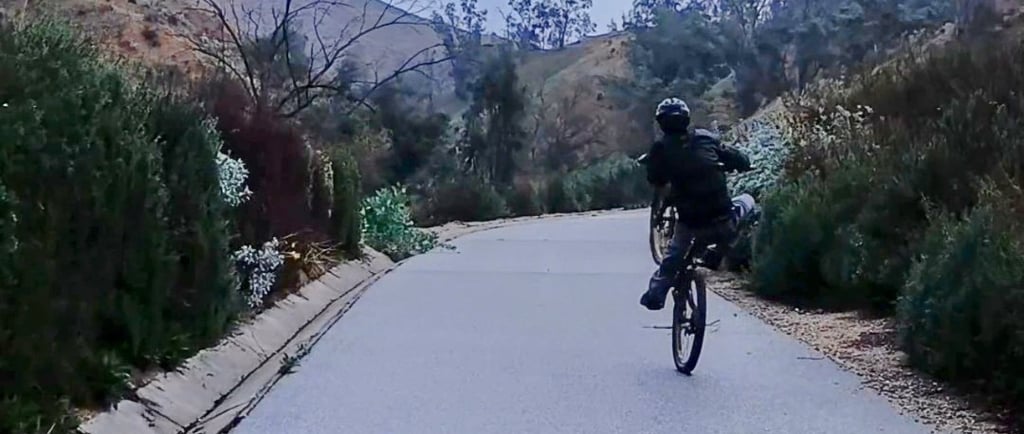
Manuals and wheelies look similar because in both skills you're balancing on the rear wheel, but the way you get the front wheel up and keep it there is different. Understanding that difference was a big part of improving them for me.
In a wheelie, you're using a downward pedal stroke along with a weight shift to bring the front wheel up. Once you're near the balance point, you can continue using pedal pressure along with your body position and rear brake to keep the wheel up. In a manual, you don't have that pedal stroke helping you. You're using a quick weight shift to unweight and lift the front, then moving your hips back and forth to keep the bike balanced.
I've been doing wheelies and manuals for years, and I've made plenty of mistakes learning them. Here are some of the things that have helped me the most and that I now focus on when explaining these skills to other riders.
Understand the Difference Between a Manual and Wheelie
One of the biggest differences between a wheelie and manual is how you initially lift the front wheel. For a wheelie, you use a strong downward pedal stroke combined with shifting your weight back. That pedal power helps rotate the bike up toward the balance point.
A manual doesn't have that pedal stroke. You're using your body movement to unweight the front of the bike. One cue I like is “down and back.” Instead of simply pulling backward on the handlebars, move your weight down first and then quickly shift your hips back. That quick movement helps unweight the front wheel and bring it up.
I've used the “down and back” cue while coaching, and it seemed to make sense to the rider immediately. I like it because it describes the movement better than simply telling someone to “lean back,” which can easily turn into hanging off the handlebars without properly moving the bike.
Learn Where the Balance Point Actually Is
Whether you're doing a wheelie or manual, eventually you need to get close to the balance point. I think of the balance point as that spot over the rear wheel where you're no longer fighting constantly to keep the front wheel up, but you're also not so far back that you're about to loop out.
The tricky part is that you don't simply find that position and stay perfectly still. When you're learning, you might hit the balance point for a second and then immediately start falling forward or backward again. As you improve, you learn to make smaller corrections that keep you around that balance point for longer.
That's where manuals and wheelies start feeling much more controlled. You're not just trying to yank the front wheel as high as possible. You're trying to get it into the useful range and then continuously manage what the bike is doing.
Use Your Hips to Keep a Manual Up
Once you're in a manual, your hips become a major part of controlling the bike. If the front wheel starts dropping, shift your hips farther back to help bring it back up. If the front starts getting too high, move your hips forward again while being ready to feather the rear brake.
This back-and-forth movement can be pretty subtle once you're good at it. Beginners often get the front wheel up and then stay frozen in one position. The front starts dropping, and by the time they react, the manual is already over.
Think of your hips as constantly making little corrections underneath the balance point. The goal isn't to find one perfect body position. It's to learn how to respond when the bike starts moving away from where you want it.
Wheelies Give You Another Way to Keep the Front Up
This is one reason I think wheelies can be easier to learn before manuals. In a wheelie, you have another tool available: pedaling.
If the front wheel starts dropping during a manual, you have to correct it through your body movement. During a wheelie, you can add pedal pressure to help bring the front wheel back up. That can make it easier to experience the balance point and start understanding what balancing on the rear wheel actually feels like.
The skills aren't identical, but there's a lot of crossover. Getting comfortable balancing a wheelie can help you understand rear brake control and the balance point before trying to hold a long manual without the help of pedaling.
Keep One Finger Ready on the Rear Brake
The rear brake is your lifeline when learning either skill. If you start going too far backward, applying the rear brake brings the front wheel back down.
But there's a difference between covering the brake and grabbing it.
If you panic and pull the rear brake hard, you can slam the front wheel back onto the ground. As you get better, you learn to feather or modulate the brake with much smaller inputs. Instead of the brake simply being an emergency switch, it becomes another way to control how high the front wheel is.
When you're learning, I recommend keeping one finger covering the rear brake so it's immediately available. You don't want to realize you're going too far back and then have to search for the lever.
Try Learning Wheelies on a Slight Uphill
One thing that helped me when learning wheelies was practicing on a slight uphill. The slope can make it easier to bring the front wheel up, and because the bike is already angled upward, you don't have to lift the front as far relative to the ground to get closer to the balance point.
The hill also naturally keeps your speed under control. You don't need anything steep. You're looking for a gentle incline where you can repeatedly practice getting the front wheel up and finding that balance point.
Once you understand the movement, you can take it back to flatter ground.
Choose a Gear That Gives You Enough Pedal Power
I get asked a lot about what gear you should use for wheelies, and there isn't one exact gear that's right for every bike and rider. If you're in too easy of a gear, getting the front wheel up may be easy, but you'll quickly spin out as your speed increases. If you're in too hard of a gear, you'll have trouble generating enough pedal force to lift the front in the first place.
For me, somewhere around fourth gear down works well, but that's just a starting point based on my bike and how I ride. Experiment until you find a gear where one strong pedal stroke gives you enough power to bring the front up without immediately spinning your legs like crazy.
Learn on Flat Pedals
When I first started learning wheelies as a kid, I made a couple of mistakes. One was trying to learn them standing up instead of sitting down. Another was practicing clipped into clipless pedals.
That second one didn't end particularly well. I looped out badly enough that I still have a small scar from it.
For someone learning wheelies and manuals today, I'd rather see them practicing on flat pedals. You want to be able to separate yourself from the bike if something goes wrong rather than being attached to it while you're still figuring out rear-wheel balance.
Give Yourself a Distance Goal
One practice method that helped me improve my wheelies was giving myself an actual distance to aim for instead of just doing random attempts.
You can put down a water bottle or use an existing marker as your starting point and choose another object farther away as your goal. Try to wheelie or manual from the first marker to the second. Once you can consistently make that distance, move the target farther away.
I like this because you can actually see your progress. Instead of thinking, I practiced wheelies for half an hour, you can say, I was making it to that crack in the pavement yesterday, and now I'm making it another ten feet.
Small goals add up.
Don't Just Pull Harder
If you're struggling to get the front wheel high enough, the answer isn't necessarily to pull harder on the handlebars. This is especially true with manuals.
Think again about that down-and-back movement. Get your weight lower and then quickly move your hips backward, allowing the front of the bike to become light. Your arms are connecting you to the bike, but you don't want the entire movement to become an arm pull.
For wheelies, you have the pedal stroke helping you. For manuals, learning to use that body movement efficiently becomes even more important.
Why Your Manual Keeps Dropping
If you can get the front wheel up but your manuals only last a second or two, there's a good chance you're not getting close enough to the balance point or you're not making corrections once you're there.
A lot of riders are understandably nervous about going too far back, so they stay well in front of the actual balance point. The front wheel comes up, looks like a manual for a moment, and immediately falls back down.
The goal isn't to recklessly throw yourself farther backward. It's to gradually become comfortable getting closer to the balance point while keeping your finger ready on the rear brake. Once you're closer, start paying attention to your hips. Front dropping? Move back. Front getting too high? Move forward and use the rear brake if necessary.
Eventually, those corrections become much smaller and faster.
Should You Learn Wheelies or Manuals First?
If someone asked me which one to learn first, I'd probably say wheelies.
A wheelie gives you pedal power to help bring the front wheel up and keep it there, which can make finding the balance point easier. You can start developing rear brake control and getting comfortable with the feeling of balancing over the rear wheel before removing the help of pedaling.
That doesn't mean you have to completely master wheelies before touching manuals. You can practice both. But if you're completely new to rear-wheel balance, I think learning the basics of a wheelie first can make the balance point easier to understand.
Manuals and Wheelies Take Time
The hardest part about learning manuals and wheelies isn't simply getting the front wheel off the ground. It's learning to control what happens after it gets there.
At first, you may only find the balance point for a fraction of a second. That's normal. Over time, you start recognizing what the bike is doing earlier. You learn when to move your hips, when to add pedal pressure during a wheelie, and how little rear brake you actually need.
Don't judge your progress by whether you can suddenly manual across an entire parking lot. Give yourself smaller goals. Learn to consistently lift the front. Get a little closer to the balance point. Hold it another few feet. Improve your rear brake control.