How to Choose an MTB Saddle (And Why I've Gone Through So Many)
After 25 years of riding I've bent rails, tried BMX seats on trail bikes, and had my padded cover stolen outside a Carl's Jr. Here's the honest guide to MTB saddles.
GEAR
6/6/20266 min read
How to Choose an MTB Saddle (And Why I've Gone Through So Many)
This post contains affiliate links. If you buy through them I may earn a small commission at no extra cost to you. I only recommend gear I've actually used or researched thoroughly.
I've bent more saddle rails than I can count.
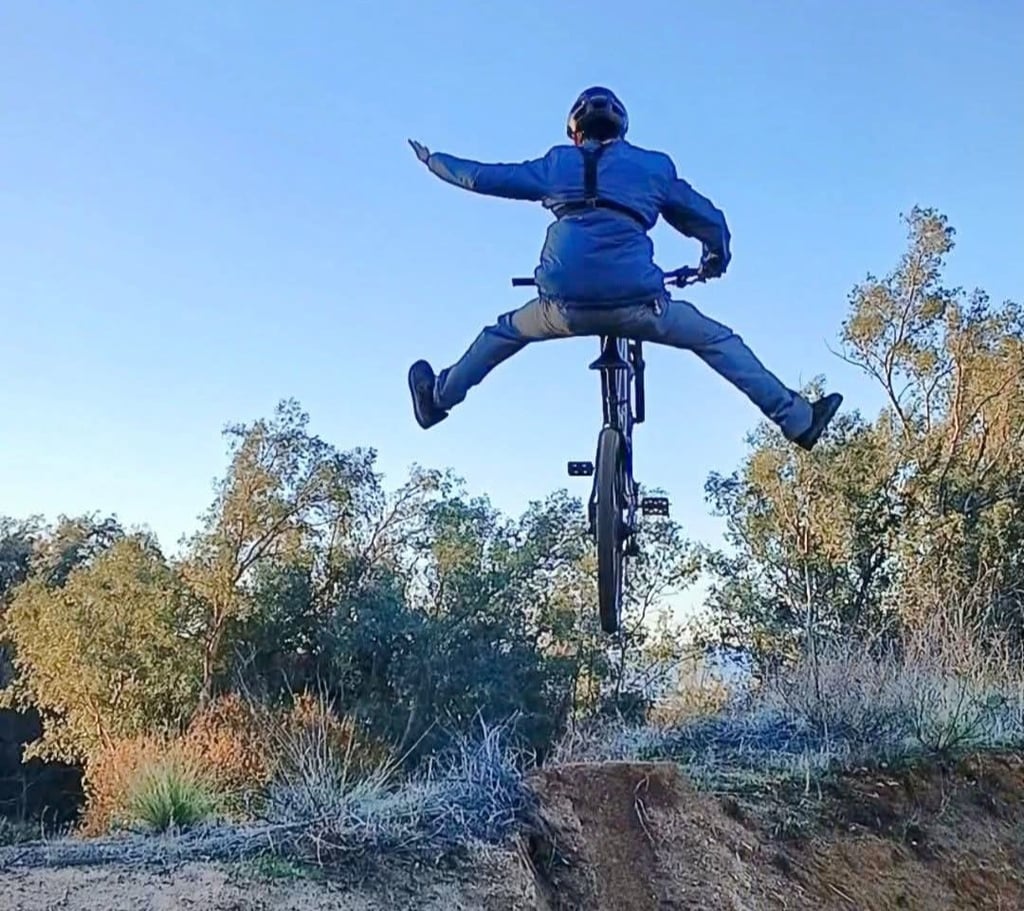
Not from crashes. From landing on the seat during no-footers when I didn't get my feet back in time. You'd feel that little give on landing, that slight wrong angle, and already know, there goes another one. It happened enough that I started thinking of rails as a consumable part, like brake pads or tires. Just part of the deal if you were throwing tricks.
That's just one chapter of a long relationship with MTB saddles going back to 1998. Here's what I've learned.
The Suspension Clearance Problem Nobody Warns You About
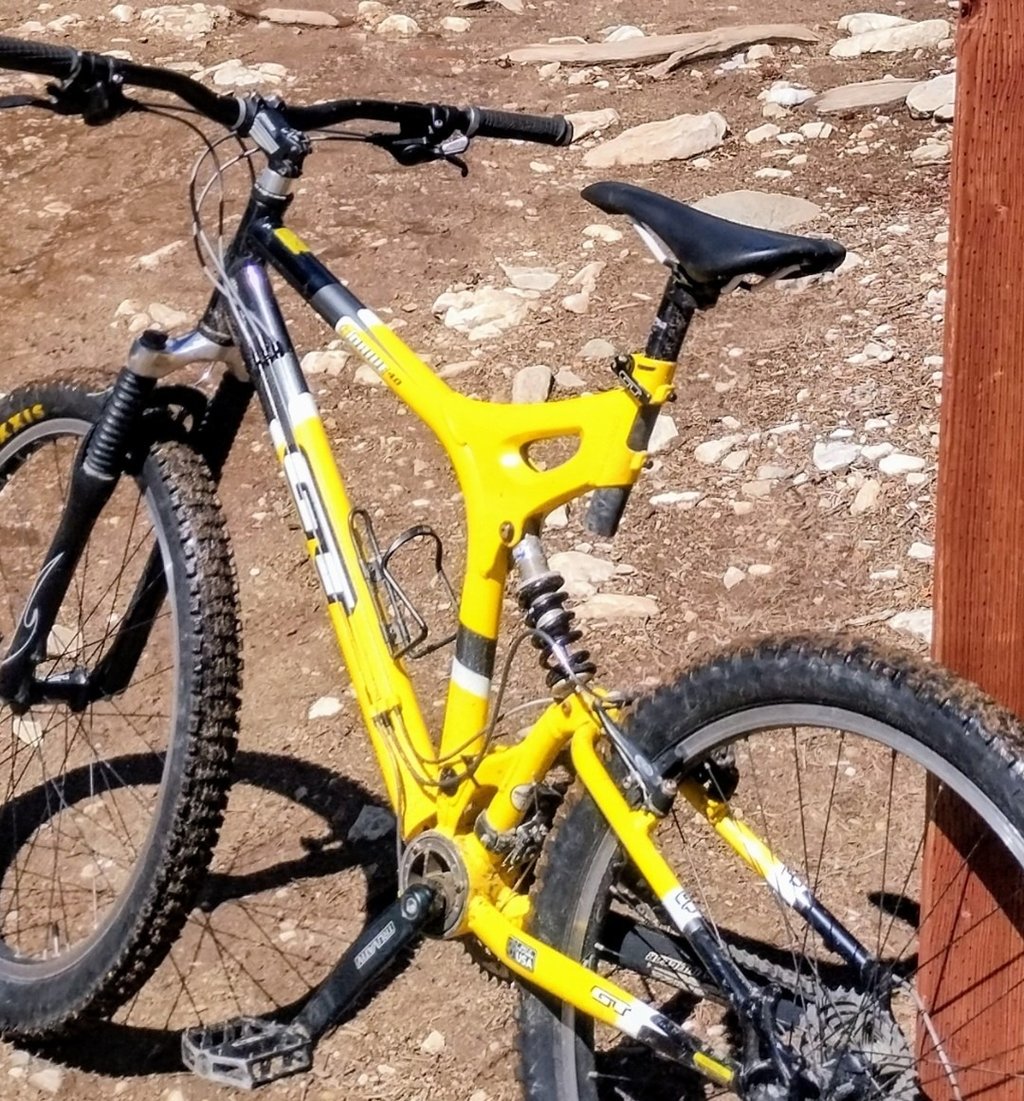
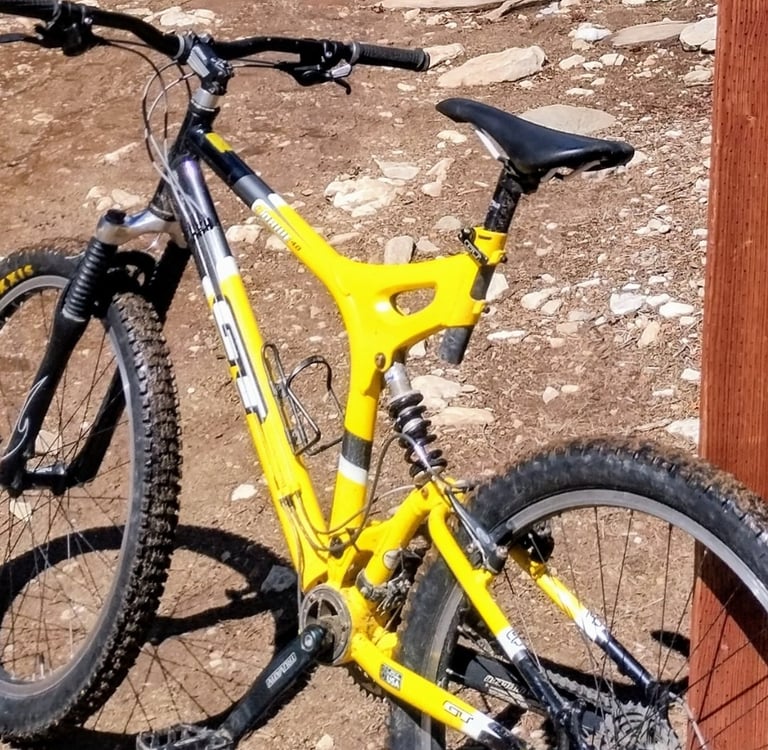
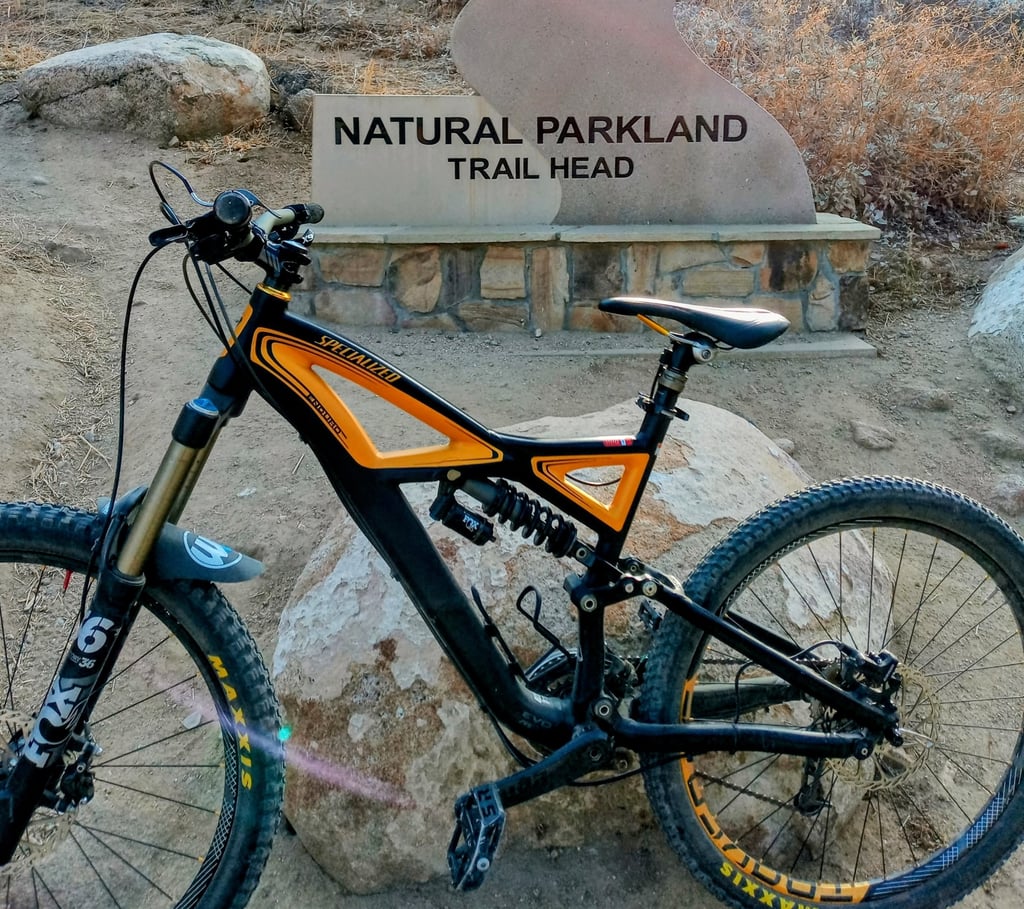
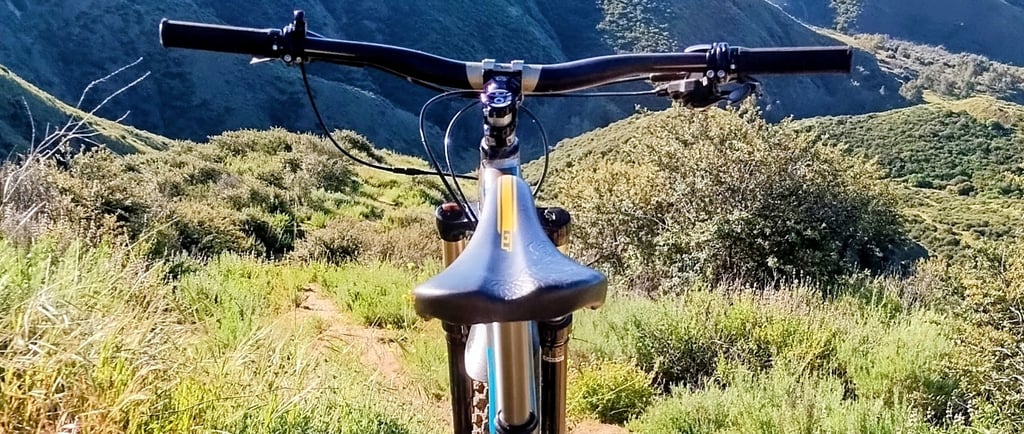
See that yellow GT in the photo? That's my commuter now, I ride it to work, run errands on it, have for years. But it's also a perfect illustration of one of the most overlooked saddle problems on older full suspension bikes.
On bikes like this, if you cut your seatpost too short trying to get your saddle height dialed, you'd eventually run out of room to raise it. Cut it a little too much and suddenly your minimum height is stuck lower than you want. Cut it way too much and the post would sit so low the saddle would actually contact the rear suspension spring on the bottom of the stroke.
It sounds like a minor thing until you're mid-ride and your saddle is literally bouncing off your rear shock. Then it's all you can think about.
The lesson: measure twice before you cut a seatpost. And if you're buying a used bike, always check that the post has enough length to give you the height you actually need.
(For more on seatpost options including dropper posts, check out my post on Do You Need a Dropper Post for MTB?)
Growing Up in the Catalog Era: Azonic and the Couch Seat
When I was younger I had a partial sponsorship with Azonic and O'Neal, mostly meaning I got discounts and access to their catalog. My dad would flip through it and we'd order gear together. That's how I got into some of the more specific MTB saddle options that were coming out at the time.
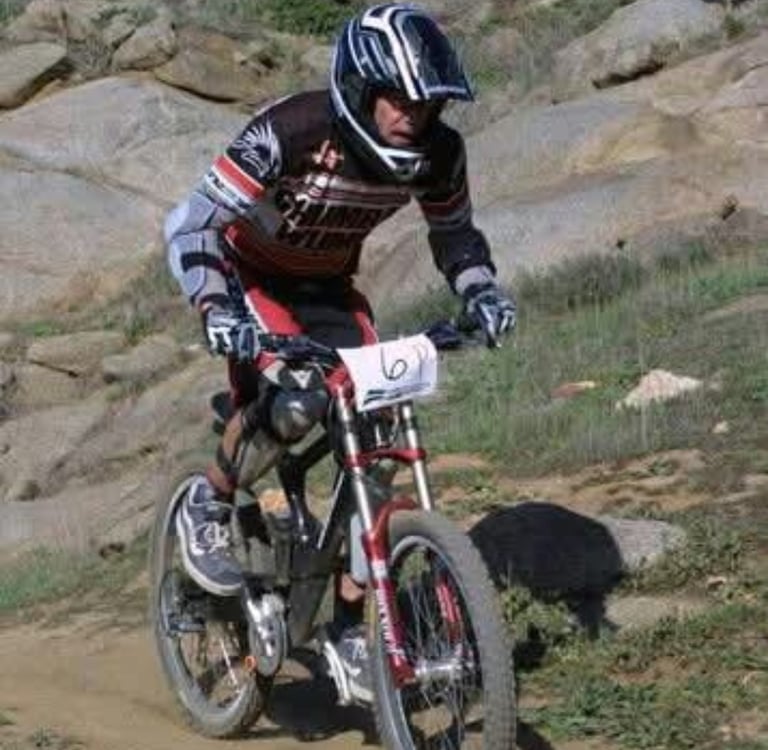
One of those was what I called the couch seat. Wide, heavily padded, almost throne-like. My dad ran one on his Chumba Wumba downhill bike and it looked like pure comfort. I tried one too.
Here's the thing about the couch seat: for straight downhill riding, bombing descents, not a lot of pedaling, it's fine. You're mostly standing on the pedals anyway. But put any real mileage on it, any sustained pedaling, and that wide shape with the pronounced edge along the side starts rubbing your inner thigh in a way that goes from mildly uncomfortable to genuinely unpleasant pretty fast. It's a purpose-built saddle for a specific type of riding and it stays in its lane for a reason.
That was an early lesson in saddle fit: more padding and more width isn't automatically better. It depends entirely on how you're riding.
Bent Rails and No-Footers: The Jump Tax
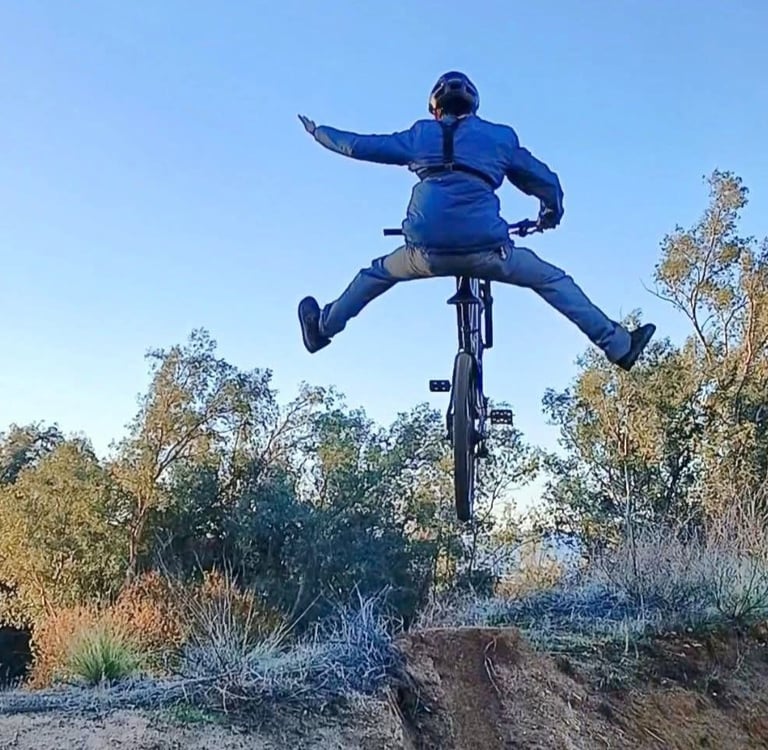
If you ride jumps and throw tricks, you will eventually land on your saddle wrong. It's just a matter of time.
No-footers were my main culprit. You kick both feet out to the sides, bike goes one way, feet go the other, and if the timing isn't perfect coming back in you hit the seat with your full weight before your feet are on the pedals. The rails — the thin metal rods underneath the saddle shell that clamp into the seatpost, take that impact and bend. Sometimes slightly. Sometimes obviously. Either way the saddle is now sitting at a wrong angle and you're either riding it crooked or replacing it.
I went through enough saddles this way that I started keeping an eye out for ones with stronger rail construction. Chromoly rails are more durable than basic steel. Titanium rails are lighter and surprisingly strong but more expensive. If you're riding park or throwing tricks regularly it's worth paying attention to what the rails are made of.
The BMX Saddle Experiment
At some point I threw a BMX saddle on an MTB. The reason was actually functional, for no-handers, having a wider nose on the saddle makes it easier to pinch the seat between your knees to control the bike while your hands are off the bars. The narrower MTB saddles of that era made that grip harder to maintain.
Did it look a little weird? Probably. Did it work? Yeah actually.
The dirt jump and BMX world also had a phase where people ran their saddles tipped all the way back, nose pointing up at an angle. The idea was partly style, partly keeping the nose out of the way during tricks. It works for that purpose but for any actual pedaling it shifts your weight backward and kills efficiency. Fine for the bike park, not great for a trail ride.
The Padded Cover Situation
At some point I tried a padded saddle cover, the gel sleeve you stretch over your existing saddle to add cushioning for longer rides. It helped a little. The extra padding took some edge off on longer commutes.
The problem was it never stayed put. Every ride it shifted slightly. And then one day I locked my bike up outside a Carl's Jr, went in to grab a burger, came back out and the padded cover was gone. Someone had just taken it off my bike and walked away with it.
I never replaced it. Figured that was the universe telling me something.
Saddle Sores: The Honest Reality
Long term riders deal with saddle sores. It's not something people talk about much but it's real, friction and pressure in the same spots over time adds up. Some riders swear by chamois cream, some by padded shorts, some by both.
I'll be honest: I commute regularly, ride a lot, and don't use chamois cream or lycra shorts. I've had some saddle soreness over the years but nothing serious. A lot of it comes down to saddle fit, when the saddle is wrong for your anatomy you feel it much faster. When it's right you can put in miles without much issue.
If you're getting saddle sores regularly it's worth looking at the saddle itself before buying cream or shorts as a fix. The saddle might just be the wrong shape for you.
Men's vs Women's Saddles: What Actually Differs
The main difference is width. Women generally have wider sit bones, the two bony points you're actually sitting on — so women's saddles are built wider at the rear to support that. Men's saddles are narrower.
This matters because you want your sit bones supported by the widest part of the saddle. If the saddle is too narrow your soft tissue takes the pressure instead and that's where discomfort and numbness come from.
Here's the thing though, anatomy varies. Some men genuinely do better on a wider saddle. Some women do better on a narrower one. The men's vs women's label is a starting point, not a rule. If you've tried several saddles in your category and still struggle with comfort, it might be worth trying a different width even if it crosses the gender label.
A lot of bike shops have saddle fit tools that can measure your sit bone width and point you toward the right size. Worth doing if you're investing in a quality saddle.
What I'm Running Now
Across my current bikes I have three saddles, a Specialized, one with a logo that looks like tree lines that I can't identify, and one that just says "G" that I picked up on Amazon and can't find anymore. That's honestly pretty common with saddles. You find something that works, you run it, and you don't overthink it.
What I look for now after all these years: a moderate amount of padding, not a couch, not a razor blade. A flat to very slightly curved profile. A shape that doesn't have aggressive edges that dig in. And rails that aren't going to bend the first time something goes wrong.
Quick Recommendations
WTB Volt Saddle — Check on Amazon (versatile trail saddle, well reviewed across riding styles)
WTB Rocket Saddle — Check on Amazon (chromoly rails, medium width, built specifically for MTB and gravel)
Ergon SM Pro Saddle — Check on Amazon (ergonomic MTB-specific design, good reviews, worth the investment if you want to get fit right)