Best MTB Grips: What to Know Before You Buy (From 25 Years of Riding)
From hairspray and zip ties to lock-on grips that actually stay put — here's what 25 years of riding taught me about choosing the right MTB grips, what thickness actually matters, and the best budget options on Amazon.
GEAR
5/2/20264 min read
Best MTB Grips: What to Know Before You Buy
Grips are one of those components that seem simple until you've been riding long enough to realize how much they actually matter. Your hands are one of three contact points with the bike, feet, seat, hands, and what's under your palms on every ride affects comfort, control, and fatigue more than most people expect starting out.
Before Lock-On Grips Existed
If you started riding in the last ten or fifteen years you've probably never dealt with push-on grips and you should consider yourself lucky. Before lock-on grips became standard getting grips on and off a handlebar was a genuine ordeal. People used hairspray to slide them on and hoped they'd hold. Air compressors to blast them off. Some riders used zip ties, thread them inside the grip, slide it onto the bar, then pull each zip tie out one at a time. It worked but it wasn't exactly elegant.
In wet conditions push-on grips would spin on the bar, which is exactly as fun as it sounds mid-descent. The moto world had a solution — wrap wire ties around the outside of the grip with pliers to keep them from rotating. MTB riders borrowed that trick out of necessity.
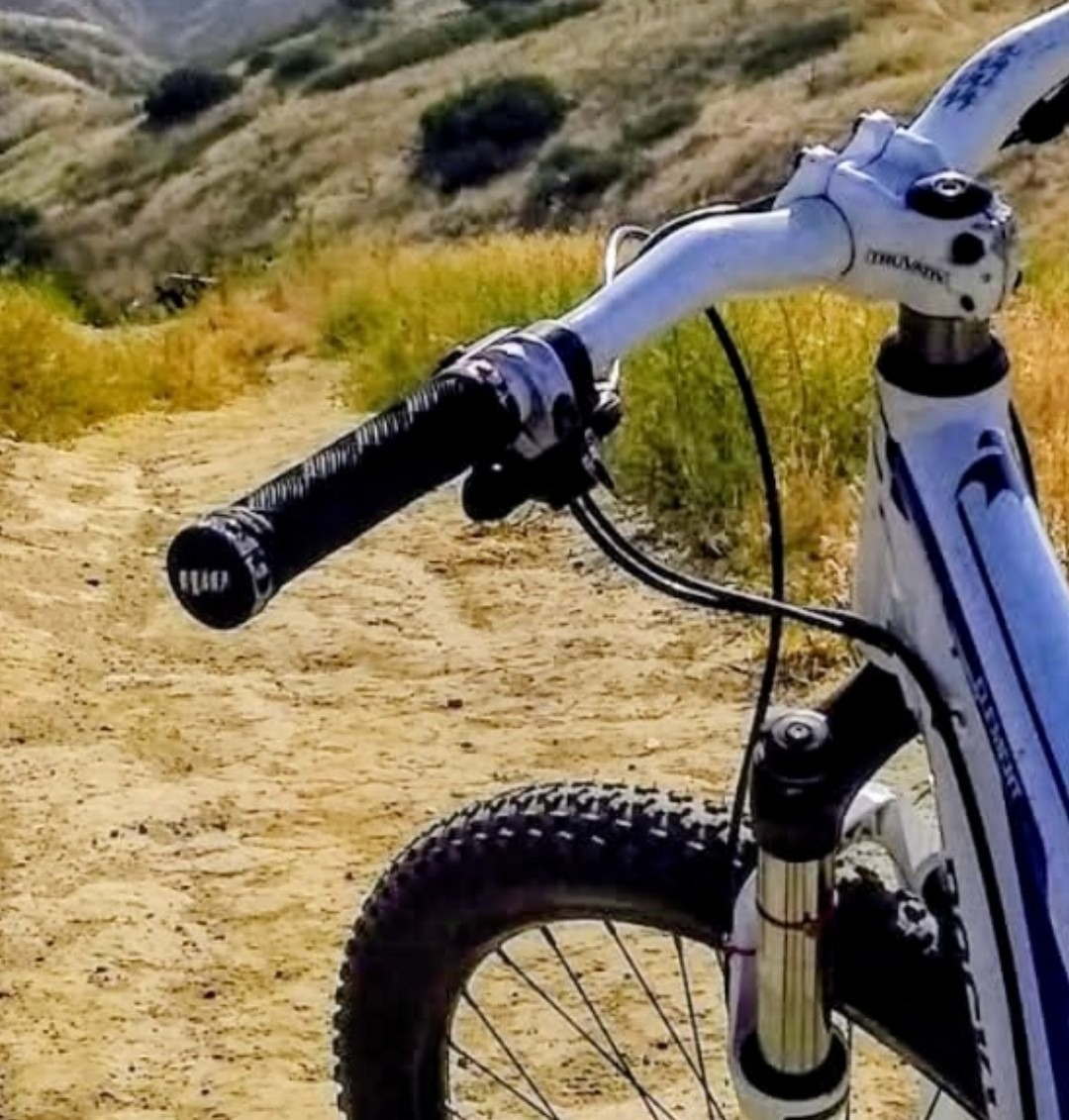
Lock-on grips changed everything. A collar with a bolt that clamps directly to the handlebar means your grips stay exactly where you put them, come off in seconds with an allen key, and don't move in any conditions. It's one of those product evolutions that seems obvious in hindsight and made everyone wonder how they ever dealt with the old way.
Thickness and Profile
This is where personal preference takes over and there's no objectively correct answer. Grips come in different thicknesses and profiles and what feels right varies by hand size, riding style, and what you're used to.
I've gone back and forth over the years. Used to run thicker ODI grips, eventually switched to thinner ones and haven't gone back. Right now I prefer either the thinnest profile I can find or a half waffle style. What I specifically don't like is grips with a lump or raised ergonomic contour in the middle — some people love that feature but for me it just gets in the way. If you're not sure where you land start with something mid thickness and adjust from there.
The half waffle pattern is worth knowing about, it's a flat profile grip with a waffle texture pattern that gives good grip without adding bulk. ODI makes one, a few other brands do too, and it's become a pretty standard choice for riders who want something simple and reliable.
One of the more interesting grip stories I remember from racing, when Lisa Mayer was riding for Chumba Wumba bikes the team mechanic actually shaved the grips down even thinner because that's how she preferred them. Custom grip thickness by hand with whatever they had available at the time. That's how much grip feel matters to some riders.
Single Lock vs Double Lock
Most lock-on grips come in single lock or double lock versions. Single lock has one collar, usually on the outside end of the grip. Double lock has a collar on both ends. Double lock is more secure and worth the slight extra cost — single lock grips can occasionally twist slightly under hard braking or rough terrain. For trail and jump riding double lock is the way to go.
Brands Worth Looking At
ODI has been my go-to for most of my riding life. They make grips across a wide range of thicknesses and styles, the quality is consistent, and they've been in the game long enough to have figured out what works. The Ruffian and the half waffle are both solid options depending on what thickness you prefer.
PNW Components makes a grip called the Loam that gets a lot of attention and deserves it, tacky rubber compound, good feel, comes in a range of colors. More expensive than the budget options but if you want to spend a little more it's worth it.
PNW Components grips on Amazon
Fifty-Fifty makes a solid double lock-on at a reasonable price point that's worth considering if you want something reliable without spending a lot.
Race Face makes good grips too — I run them on one of my bikes currently. Reliable, good rubber compound, nothing flashy but they do the job well.
For budget options the GPMTER single lock grips on Amazon run around $7 and have thousands of reviews. Fine for getting started. ESI makes silicone grips that are popular for the cushioning feel, different from rubber, some people love them, worth trying if you want something softer.
Grip as Style
Grips are also just another way to put your own stamp on your bike. Vans makes grips with their shoe sole pattern on them. Color options across most brands are wide, teal, orange, red, tan, whatever matches your bike or your personality. It's a small thing but on a sport where personal style matters it's one of the easiest and cheapest ways to make your bike look like yours.
What to Get
If you're just starting out and want something reliable without overthinking it, a double lock-on grip in the $15-25 range from ODI, Fifty-Fifty, or Race Face gets you sorted. Avoid grips with heavy ergonomic contouring until you know whether you actually like that feel. And if you're not sure on thickness, mid range is a safe starting point — you can always go thinner on your next pair.
Also check out my post on clipless vs flat pedals to see which one is right for you.